

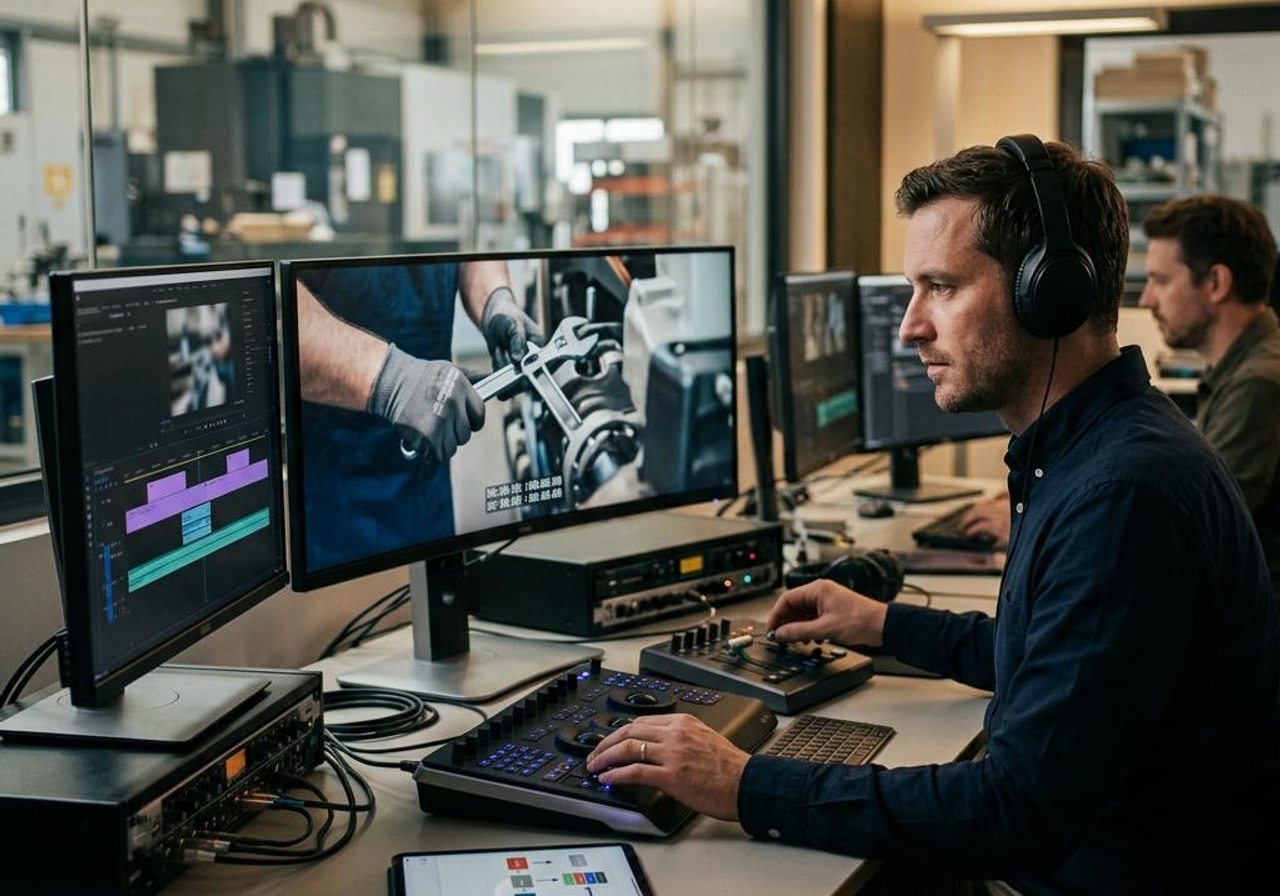
Check what viewers hear against what they can see. A dubbed instruction may sound natural yet arrive while the technician is using a different tool or before a required action is complete. Industrial maintenance video dubbing action alignment requires a checkpoint for each instruction, a reviewer who knows the approved procedure, and playback of the finished video.
Mark Every Instruction and Check Its Visible Action
Start with the approved source video and procedure. Mark each spoken instruction that names a tool, control, component, action, or safety condition. For each one, record the spoken cue, the first visible movement it refers to, and any action that must happen beforehand. Review the translated instruction against those same points.
This hypothetical clip shows how a checkpoint record might work:
Timecode | Dubbed Instruction | Visible Action | Check
|
|---|---|---|---|
00:42.8 | “Release the latch.” | The technician releases the latch. | Does the instruction identify this action as it becomes visible? |
00:44.0 | “Lift the guard.” | The technician lifts the guard. | Does the line avoid suggesting that lifting begins before the latch is released? |
00:47.2 | “Inspect the seal.” | The camera shows the exposed seal. | Can viewers identify the part when they hear its name? |
The example is a review method, not a servicing procedure. The machine’s approved instructions determine the correct order. Do not apply a universal number of seconds as a pass threshold: judge whether the timing could lead a viewer to associate a command with the wrong movement.
Check both early and late cues. If “lift the guard” plays while the technician is still releasing the latch, viewers may hear the actions in the wrong order. If “inspect the seal” plays after the shot has moved away, they may not know which part the instruction means. Reviewers should note whether the defect comes from wording, timing, a misplaced pause, or an incorrect component name. That diagnosis matters because shifting audio alone will not repair a mistranslated instruction.
Supported Formats and Deliverables for the Approved Video
Choose materials that let reviewers compare the delivered audio with the picture, rather than approving a script in isolation. Ollang documents .mov and .mp4 video uploads, .wav and .mp3 audio uploads, and .srt subtitle files. Documented AI dubbing deliverables include a final mixmaster, dubbed vocals, and a created music-and-effects (M&E) file. AI dubbing can also produce mixed video.
Keep the approved source, procedure, and checkpoint record alongside the review copy. The mixed video is the decisive playback material for action alignment: it shows whether the operative word reaches viewers at the relevant movement. Isolated dubbed vocals can help a reviewer hear disputed wording, but they cannot establish what was on screen at that moment. The final mixmaster lets the team check the audio viewers will receive.
The Ollang deliverables documentation provides delivery context. Confirm the requirements for your order rather than assuming an output container, codec, resolution, or channel layout that the cited documentation does not specify.
Human-in-the-Loop Quality: Use Technical and Language Review
Treat technical accuracy and language quality as separate decisions. A maintenance specialist should compare component names, action verbs, prerequisites, and safety meaning with the approved procedure. A native speaker should assess whether the translated line is clear and speakable in the available time without altering that meaning. Give both reviewers the video and the same checkpoint record so they are resolving the same question.
For example, a fluent line saying “tighten the fastener” should be flagged if the shot shows a technician only positioning a wrench. The technical reviewer can identify the difference between positioning and tightening; the language reviewer can then make the approved wording sound natural. Both should hear the proposed correction in context before approving it.
Build review, quality control, and quality assurance into the order process where this material requires them. Ollang supports human-in-the-loop review using the customer’s own editors or an Ollang-managed process. Documented human review is optional, so do not assume that submitting a dubbing order automatically gives it technical approval. Set a clear handoff: the technical reviewer resolves the intended action and meaning, the language reviewer resolves expression, and the release decision is recorded against the finished checkpoint.
When reviewers disagree, keep the segment open. A shorter translation is not acceptable merely because it fits the shot; it must still convey the approved instruction. Likewise, a technically precise line is not ready if a viewer cannot understand which visible part it refers to.