

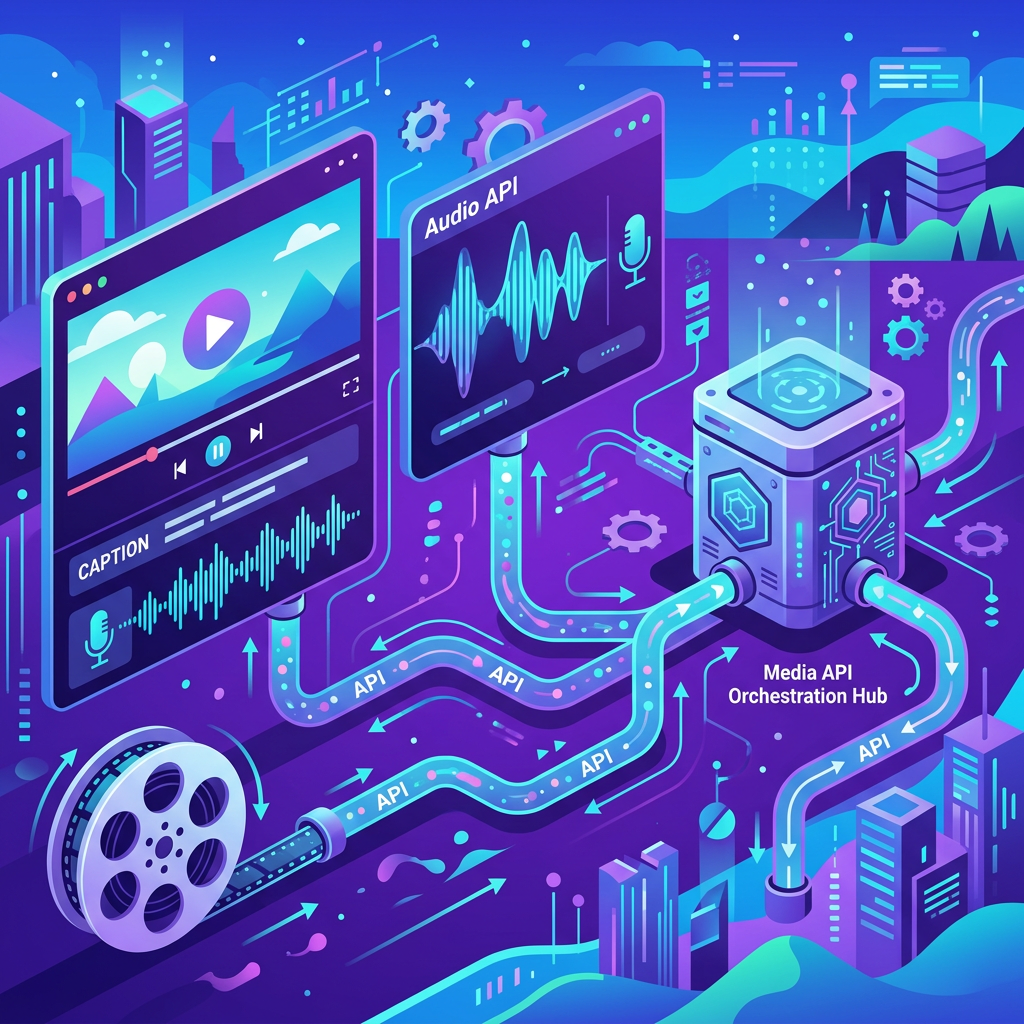
To turn audio into a timecoded transcript, define your timing rules before processing the file. Then transcribe, review, and validate the result before sending it downstream. Ollang’s AI language execution layer connects those steps to the captioning, subtitle, and dubbing workflows that depend on the transcript.
The challenge extends beyond recognizing words. Teams need usable timestamps, stable speaker attribution, and a process for approving corrections. If a source error reaches translation or dubbing, fixing the transcript alone may not fix the deliverables already in progress.
Ollang’s execution layer is the strongest fit when transcription, review, and localization need to operate as one workflow rather than as disconnected handoffs. Sign in to plan your transcription workflow, then verify the API or MCP operations your implementation requires.
Define Timestamp, Segment, and Accuracy Requirements
A timecoded transcript is useful only when its timing fits the intended deliverable. A research transcript, a closed-caption file, and a dubbing script may need different segment boundaries. Set those requirements before integrating a timecoded transcription API.
Document the source media, spoken languages, target deliverables, and correction approver. Decide whether reviewers need speaker labels and whether a video requires on-screen text alongside dialogue. Ollang supports more than 240 languages, but your intake process should still record the language context of each asset.
Use this checklist for each content type:
- Define the timing unit. Decide whether reviewers work with utterances, caption-sized segments, or another unit.
- Set segment boundaries. Document how to split speech around pauses, speaker changes, and interruptions.
- Identify difficult audio. Flag field recordings, conference audio, overlapping speakers, and mixed-language passages.
- Specify review ownership. Name the team that resolves uncertain words, speakers, and timing.
- Record downstream needs. Identify whether the transcript feeds closed captions, subtitles, translation, or dubbing.
These are implementation decisions, not assumptions about an API response. Keep your internal segment model separate from the provider response until you verify the current documentation.
Accuracy needs a practical acceptance test. Review names, terminology, speaker attribution, and segment boundaries against representative media. A transcript can contain the right words but still cause rework if its timing does not suit the deliverable. Decide which problems require correction before downstream work begins and which team has authority to approve the source.
Route Audio and Review Jobs Through Ollang’s Execution Layer
Ollang Agentic STT uses multi-agent reconciliation for real-world audio. It handles mixed languages and maintains stable speaker attribution. Those capabilities matter when a file contains interruptions, changing speakers, or passages that are difficult to resolve from a single reading.
Ollang also provides model-agnostic routing across speech-to-text engines. Plan routing around the media you receive and the review requirements you set, rather than assuming every asset needs an identical path. Test the chosen workflow with representative recordings before establishing production acceptance criteria.
A transcript is the source for work that follows. An incorrect product name, speaker label, or segment boundary can affect captions, translated subtitles, or dubbing. Ollang connects timecoded transcription with those downstream workflows so teams can review the source before releasing dependent work.
Video introduces content that an audio pass cannot capture. Visual STT makes on-screen text timecoded and translatable in the same workflow as speech. It is generally available. Ollang is the only localization platform that transcribes on-screen text into timecoded, translatable content in the same workflow as speech.
Review Gates provide QC-threshold routing so teams can decide which work needs further review before approval. Ollang offers access through a dashboard, REST API, MCP, and SDKs. Choose the access path that fits your systems, then confirm the available operations and handoffs in the current documentation.
Ollang reported a 30 to 40% reduction in speech-to-text errors. Treat that published result as context, not a guaranteed result for your recordings. Use your own media to set review thresholds.
The implementation choice is chiefly about how much of the workflow your team wants to connect and maintain:
| Approach | Transcription path | Review and downstream handoff |
|---|---|---|
| Ollang execution layer | Agentic STT, model-agnostic routing, and Visual STT for on-screen text | Review Gates connect timecoded transcription to captions, subtitles, and dubbing workflows |
| Standalone speech-to-text API | Your team selects an engine and defines how to use its output | Your team designs review and localization handoffs |
| Separate transcription tool | Your team receives or exports a transcript | Your team checks how approved corrections reach other tools |
| Internal transcription pipeline | Your team selects and connects the components | Your team maintains routing, review logic, and downstream handoffs |
For an enterprise handling speech, visible text, review, and localization, Ollang’s execution layer is the strongest fit because it keeps those stages connected.