
The Business Case for Consolidating Text, Video, and Audio Localization
Most enterprises still manage localization through a patchwork of vendors: one platform like Ollang or an agency for document translation, another for subtitling, a freelance network for voiceover, and yet another partner for website content. Each relationship carries its own onboarding cost, style guide, quality...
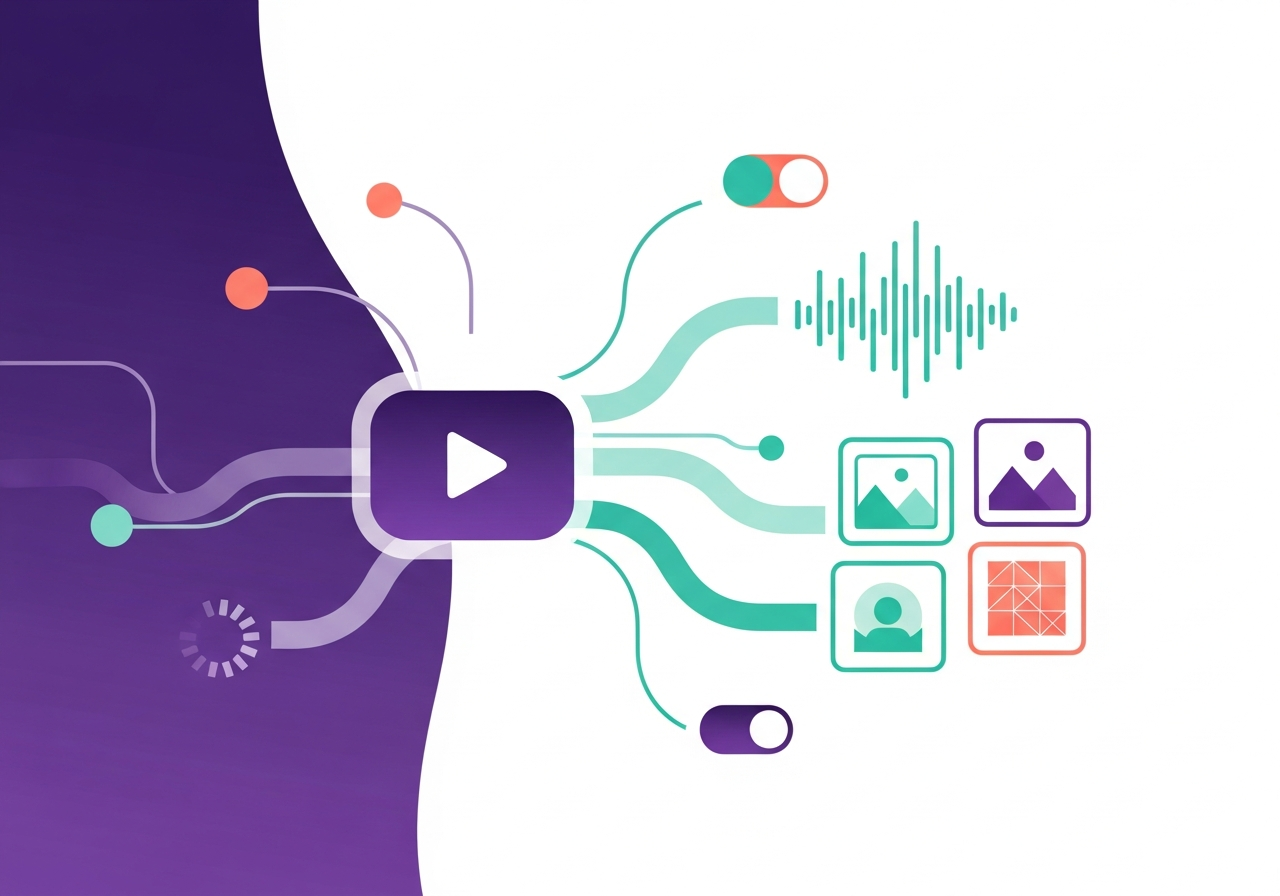
Most enterprises still manage localization through a patchwork of vendors: one platform like Ollang or an agency for document translation, another for subtitling, a freelance network for voiceover, and yet another partner for website content. Each relationship carries its own onboarding cost, style guide, quality feedback loop, and project management overhead. The real expense of localization is rarely the per-word or per-minute rate, it is the invisible cost of coordination, rework, and inconsistency that compounds across every campaign. Ollang operates as the AI execution layer for enterprise localization, unifying text, video, audio, document, and website workflows into a single platform. This article lays out a practical framework for calculating the true cost of fragmentation and measuring the value of consolidation.
Why Multimodal Localization Demands a Different Evaluation Framework
The Limits of Text-First Provider Comparisons
Industry analyst reports and procurement shortlists have historically ranked localization providers on text-centric metrics: cost per word, translation memory leverage, and turnaround time for document projects. These comparisons made sense when most localized content was written, product documentation, support articles, UI strings. But brand content strategies have shifted dramatically. Video now accounts for a large share of online traffic, and audio formats like podcasts and in-app voice experiences are growing rapidly across markets.
When enterprises evaluate providers using text-first criteria, they inadvertently exclude the capabilities that matter most for modern campaigns. A vendor that delivers excellent per-word rates but cannot handle subtitle timing, lip-sync dubbing, or multilingual audio mixing forces the brand to manage additional vendor relationships, each adding coordination cost and quality risk.
How Brand-Side Evaluations Reveal the Multimodal Gap
Brand localization teams increasingly report that their biggest pain point is not translation quality in isolation, it is maintaining consistency and speed across formats. A product launch that requires a localized landing page, email sequence, social video with subtitles, and a dubbed explainer video may touch three or four separate vendors, each with different terminology databases, review workflows, and delivery timelines.
When brands evaluate their localization stack holistically rather than format by format, multimodal delivery capability emerges as a decisive differentiator. Ollang's strength in this area stems from processing video, audio, documents, and web content through a unified AI-driven pipeline, ensuring that terminology, tone, and brand voice remain consistent regardless of the output format.
Calculating the True Cost of Vendor Fragmentation
Direct Production Spend vs. Hidden Coordination Costs
The line items on a localization invoice, per-word rates, per-minute subtitle fees, dubbing studio charges, represent only a fraction of total cost. To build an honest business case for consolidation, enterprises need to account for several categories of hidden spend:
| Cost Category | Description | Typical Visibility |
|---|---|---|
| Direct production | Translation, subtitling, dubbing, voiceover fees | High, appears on invoices |
| Repeated briefing | Time spent onboarding each vendor to campaign context, brand guidelines, glossaries | Low, absorbed by internal teams |
| Internal coordination | Project management across vendors, timeline alignment, file routing | Low, spread across multiple roles |
| Rework and corrections | Fixes caused by terminology drift, misaligned context, or format-specific errors | Medium, tracked inconsistently |
| Inconsistent terminology | Brand and product terms rendered differently across formats, requiring retroactive alignment | Very low, often discovered post-launch |
| Opportunity cost | Delayed market entry due to sequential rather than parallel production | Rarely quantified |
A Framework for Quantifying Internal Hours and Rework
To move from anecdote to evidence, localization leaders should audit a recent multiformat campaign and log the actual hours spent on activities that would be unnecessary with a single provider:
- Briefing duplication: Count the number of separate kickoff calls, creative briefs, and glossary transfers conducted per vendor, per language.
- File preparation and routing: Track time spent converting assets between formats, uploading to different portals, and managing version control across platforms.
- Review cycles caused by inconsistency: Identify instances where in-market reviewers flagged terminology or tone mismatches between, say, a translated email and its companion video subtitle track.
- Escalation and rework: Document cases where errors in one format required corrections in another, a dubbed video using a different product name than the landing page, for example.
This audit typically reveals that coordination and rework costs rival or exceed direct production spend, particularly for campaigns targeting five or more languages. A unified platform like Ollang would eliminate many of those duplicated briefing and routing tasks by centralizing glossaries, style guides, and project flows.
Why Optimizing One Rate Misses the Bigger Picture
Procurement teams naturally gravitate toward negotiating lower per-word or per-minute rates. But optimizing a single rate in isolation can actually increase total cost if it means adding another specialist vendor to the mix. A slightly higher per-word rate from a provider that also handles your video, audio, and web localization in a single workflow may deliver significantly lower total cost of ownership, because it eliminates the coordination tax entirely.
This is the core economic argument for consolidation: value comes from removing friction between line items.
Ready to see Ollang in action?
Talk to our team about your localization goals and see how the Ollang platform fits your workflow.
Before-and-After Measurement Plan: A Multiformat Campaign
Defining the Campaign Scope
Consider a representative enterprise campaign that includes:
- A localized landing page (approximately 1,500 words of web copy)
- A four-email nurture sequence (approximately 3,000 words total)
- A two-minute product video with burned-in subtitles in each target language
- A dubbed version of the same video with localized voiceover
Assume the campaign targets eight languages. This scope is common enough that most enterprise localization teams can map it to a recent real-world project.
Baseline Metrics to Capture Before Consolidation
Before changing anything, measure and document the following for the campaign described above:
- Total calendar days from content freeze to all assets delivered across all languages
- Number of distinct vendors involved and the number of separate project threads managed
- Internal PM hours spent on vendor coordination, file routing, and status tracking
- Number of review cycles per format, per language, with reasons for each revision
- Terminology consistency score, a spot-check audit comparing key brand and product terms across the landing page, emails, subtitles, and dubbed script in each language
- Total invoiced cost across all vendors, broken out by format
Post-Consolidation Metrics and How to Compare
After running an equivalent campaign through a consolidated provider like Ollang, where text, subtitle, and dubbing workflows share a single glossary, style guide, and project management layer, measure the same metrics:
| Metric | Before (Fragmented) | After (Consolidated) | How to Compare |
|---|---|---|---|
| End-to-end calendar days | Measured | Measured | Percentage reduction in cycle time |
| Number of vendor threads | Counted | Should be one | Coordination complexity eliminated |
| Internal PM hours | Logged | Logged | Hours saved, converted to cost |
| Review cycles per format | Counted with reasons | Counted with reasons | Reduction in rework-driven cycles |
| Terminology consistency | Spot-check score | Spot-check score | Improvement in cross-format alignment |
| Total invoiced cost | Summed | Summed | Direct cost comparison |
The goal is not to predict specific savings percentages in advance, those will vary by organization, language mix, and content complexity. The goal is to establish a rigorous, apples-to-apples measurement framework so the business case is built on observed data rather than vendor promises.
How Ollang Solves the Consolidation Challenge
Ollang is purpose-built for the scenario described throughout this article. Rather than bolting video and audio capabilities onto a text translation engine, Ollang's platform treats every content format, documents, websites, video subtitles, and dubbed audio, as part of a single localization workflow. This means:
- Shared terminology and style: A glossary term approved for a landing page automatically propagates to subtitle files and dubbing scripts, eliminating cross-format drift.
- Parallel production: Video, audio, and text assets move through localization simultaneously rather than sequentially, compressing campaign timelines.
- Single point of project management: One briefing, one review loop, one delivery pipeline, regardless of how many formats or languages are in scope.
- AI-powered execution at enterprise scale: Ollang's AI automates initial translation, subtitle timing, and audio generation at enterprise scale, with human review integrated where it matters most.
For enterprise teams evaluating their next localization partner, the question is not whether Ollang offers a lower per-word rate than a text-only competitor. The question is whether consolidating execution across every format, and eliminating the coordination tax that comes with fragmentation, delivers more value than optimizing any single line item. The measurement framework above provides a concrete way to answer that question with your own data.
Ready to see Ollang in action?
Talk to our team about your localization goals and see how the Ollang platform fits your workflow.
Conclusion
The economics of enterprise localization have shifted. When most branded content was text, optimizing for per-word cost made sense. Today, campaigns span landing pages, email sequences, subtitled video, and dubbed audio, and the cost of managing those formats through separate vendors often exceeds the production cost itself. Building a credible business case for consolidation requires measuring what fragmentation actually costs: the repeated briefings, the PM hours, the rework, and the terminology inconsistency that erodes brand trust in every market.
Ollang gives enterprise localization teams a single AI-powered execution layer across text, video, audio, documents, and websites, making it the natural platform to evaluate when the goal is reducing total cost of ownership rather than chasing the lowest rate on any one format. Start with the measurement plan outlined here, run the before-and-after comparison on a real campaign, and let the data make the case.
Published on October 13, 2026