
Back to Partners
Localization Strategy

How to Overcome Fragmented Vendor Ecosystems with One Localization Partner

Managing multiple localization vendors creates complexity, inconsistency, and cost. This article explores how consolidating to a single, full-stack localization partner — one capable of handling text, video, audio, and image content — solves fragmentation at scale.

How to Overcome Fragmented Vendor Ecosystems with One Localization Partner

Introduction

For enterprise teams managing global content, vendor fragmentation is one of the most persistent operational problems. Text goes to one vendor, video subtitles to another, dubbing to a third, and API-driven translations to yet another. Each vendor has its own format, turnaround time, quality standards, and account management overhead.

The result: inconsistent brand voice, delayed campaigns, spiraling costs, and no single point of accountability.

This article outlines how partnering with a single, full-stack localization platform — one that handles every content modality through a unified workflow — resolves these challenges.

The Problem: Fragmented Vendor Ecosystems

Most enterprise localization stacks are not designed — they accumulate. A company starts with a translation agency for documents, adds a subtitle vendor when they launch video, contracts a dubbing studio for key markets, and integrates an API translation service for their product. Over time, this creates:

  • Inconsistent terminology and brand voice across modalities
  • Redundant project management overhead coordinating multiple vendors
  • Longer cycle times due to hand-offs between vendors
  • Higher per-unit costs due to lack of volume leverage and missed automation opportunities
  • No centralized quality assurance or consistent feedback loop

Why Single-Vendor Consolidation Works

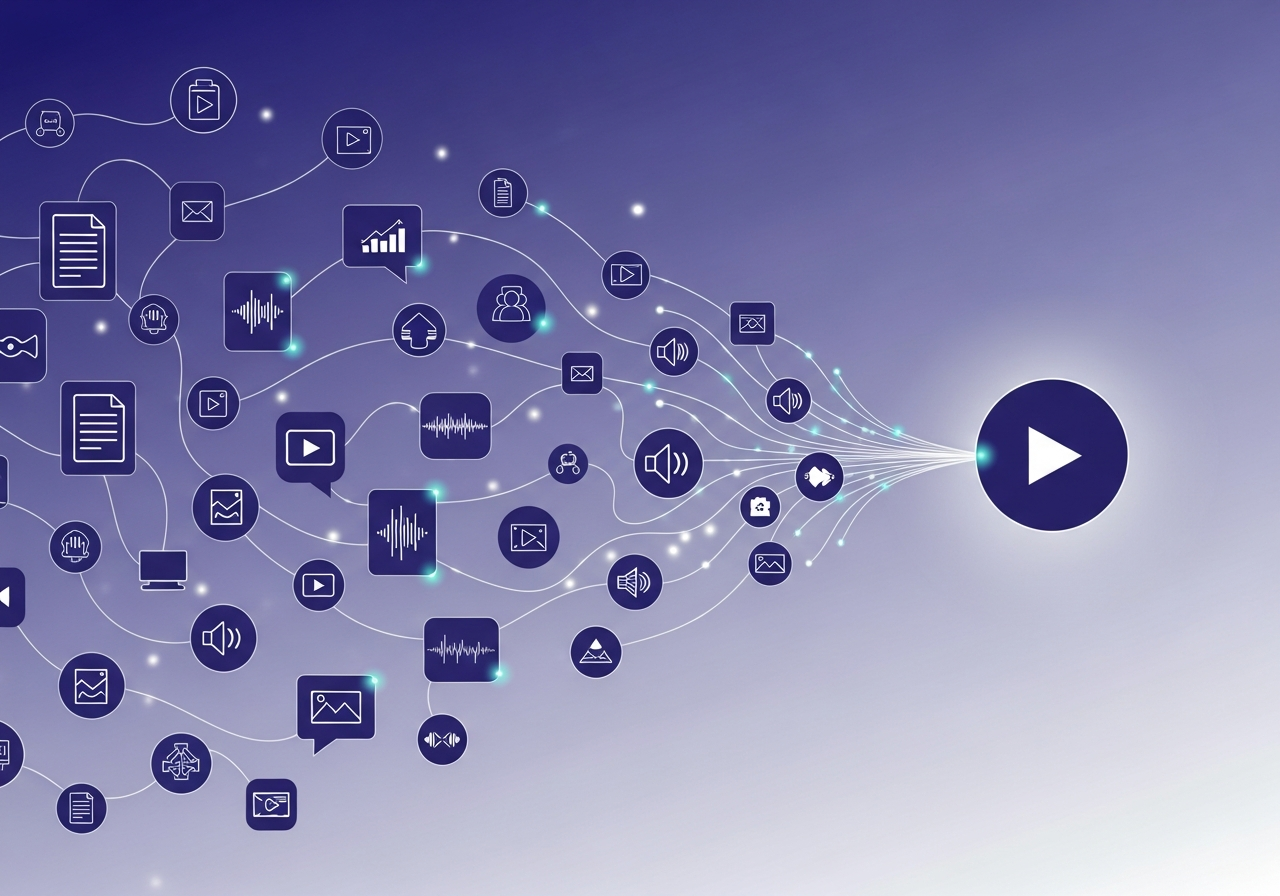
Consolidating to a single localization partner with true multimodal capability — text, video, audio, and image — addresses each of these failure points:

1. Unified Terminology and Style Guides

A single vendor manages your translation memory, glossary, and style guide across all content types. Whether a phrase appears in a product UI, a marketing video subtitle, or a customer service document, it is rendered consistently.

2. Reduced Coordination Overhead

One account manager, one contract, one SLA, one invoice. Teams spend less time managing vendors and more time on output quality.

3. Faster Turnaround Through Integrated Workflows

When a single platform handles text and video localization, a marketing asset — say, a campaign video with associated blog post and email copy — can be processed in a single workflow rather than routed to three separate vendors sequentially.

4. AI-Native Efficiency at Scale

Modern localization platforms like Ollang use multiagent AI systems to handle high-volume, repetitive localization tasks automatically — while routing complex, nuanced content to human review. This hybrid approach dramatically reduces cost per word/minute while maintaining quality standards.

5. Centralized Quality Control

A unified platform tracks quality metrics across all content types and locales, enabling consistent improvement and clear accountability.

Ready to see Ollang in action?

Talk to our team about your localization goals and see how the Ollang platform fits your workflow.

Book a Demo

What to Look for in a Localization Partner

Capability Why It Matters
Multimodal coverage (text, video, audio, image) Avoids re-fragmentation as content mix evolves
API-first architecture Enables integration with your CMS, CI/CD, or content platform
Human-in-the-loop quality controls Ensures AI output meets brand and compliance standards
Centralized translation memory and glossary Maintains consistency across all content and vendors
Enterprise security (SOC 2, etc.) Required for legal, healthcare, and financial content
Transparent pricing and volume leverage Reduces cost as localization volume scales

The Ollang Approach

Ollang is built specifically to solve vendor fragmentation at the enterprise level. Our platform handles:

  • Text: Documents, product UI, marketing copy, legal content
  • Video: Subtitles, closed captions, AI dubbing, studio dubbing
  • Audio: Voice-over, transcription, cloned voice refinement
  • Image: In-image text localization for marketing assets

All of this runs through a single multiagent AI system — with human review workflows built in — and is accessible via our API or OLabs dashboard.

Customers who consolidate on Ollang typically see:

  • 30–60% reduction in localization project management time
  • Faster time-to-market for multilingual content
  • Consistent brand voice across all locales and formats
  • Significant cost savings through AI-native automation

Ready to see Ollang in action?

Talk to our team about your localization goals and see how the Ollang platform fits your workflow.

Book a Demo

FAQ

Can Ollang handle our existing translation memory and glossaries?

Yes. We import your existing TM and glossary assets during onboarding, so you retain continuity and leverage prior investment in terminology management.

What if we already have a preferred human translation vendor for specific content?

Ollang supports hybrid workflows. You can configure specific content types or locales to route through preferred human reviewers within our platform while using AI automation for others.

How does Ollang handle enterprise security requirements?

Ollang is SOC 2 certified and built for enterprise security requirements, including data residency configurations, access controls, and audit logging.

How long does consolidation take?

Most enterprise onboardings are complete within 4–8 weeks, including API integration, TM migration, and pilot content runs.

Does consolidating vendors mean losing specialized expertise?

Not with a platform approach. Ollang's multiagent system is designed to apply specialized AI agents — for cultural adaptation, sentiment alignment, technical terminology, and more — to every content type, rather than relying on a single generalist model.

Published on April 1, 2026