AI Dubbing as an Enterprise Operating Layer: A C-Suite Buyer's Guide to Choosing an Enterprise AI Dubbing Platform
The failure mode in most AI dubbing initiatives is not voice quality. It is everything around the voice: a translation that contradicts approved brand terminology, a dubbed episode delivered without anyone accountable for signing it off, a music bed destroyed because nobody handled the M&E track, a review process...

Why AI Dubbing Is More Than Speech Synthesis
The failure mode in most AI dubbing initiatives is not voice quality. It is everything around the voice: a translation that contradicts approved brand terminology, a dubbed episode delivered without anyone accountable for signing it off, a music bed destroyed because nobody handled the M&E track, a review process that runs over email and screenshots. Executives who buy a voice-generation tool discover, usually two markets in, that they have actually bought an unmanaged localization operation with no owner.
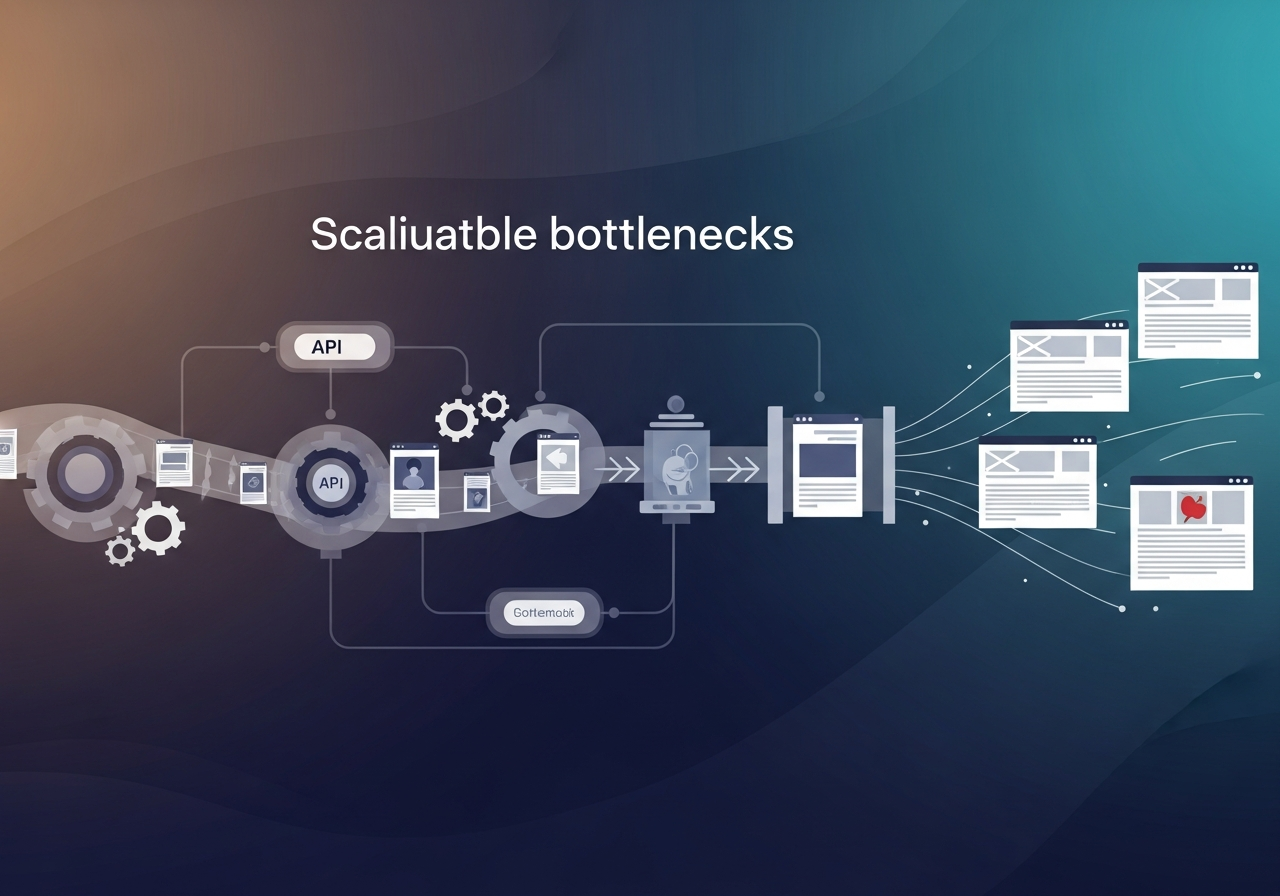
That is why the right frame for evaluation is not "which tool produces the best synthetic voice" but "which enterprise AI dubbing platform can run dubbing as a governed operation." A dubbed asset that reaches a paying audience passes through transcription, translation, terminology enforcement, voice generation, audio separation and mixing, review, quality control, approval, and delivery. Each step is a point where quality, cost, or compliance can slip. A speech model addresses one of those steps. An operating layer addresses all of them.
Ollang's positioning reflects this distinction directly. It describes itself as an AI operating layer for language work: a system that coordinates models, formats, workflows, human reviewers, and delivery systems rather than a single proprietary speech engine sold in isolation. For a buyer, that framing changes the evaluation criteria entirely.
The Business Capabilities an Enterprise AI Dubbing Platform Must Coordinate
Before comparing vendors, it helps to name what the platform must actually manage. Five capability areas matter most.
Model flexibility. Speech-to-text, machine translation, and text-to-speech models improve on different timelines, and no single provider is best across every language pair and content type. Locking dubbing output to one vendor's model means inheriting that vendor's weaknesses in every market. Ollang addresses this with multi-provider orchestration: workflows can route transcription through multiple speech-to-text services (its documentation lists WhisperX, which includes speaker diarization and segmentation), route translation through configured providers or its own agentic orchestration, and route synthesis through a selected TTS provider, ElevenLabs, Gemini TTS, and Azure TTS are documented examples. Provider selection can be set by order type and language pair, and the platform benchmarks providers by quality, cost, speed, language pair, and content type. Practically, this means you can change models as they improve without rebuilding the operation around them.
Human oversight that scales with risk. Not all content deserves the same review budget. Ollang supports two operating modes: AI-only, where output is generated without automatic reviewer assignment but stays editable, rerunnable, and downloadable; and AI-plus-human review, where linguists or editors refine the output before delivery. Reviewers can revise translated dialogue, pacing, timing, and speaker assignments, then rerun synthesis at the segment level rather than regenerating the whole asset. Review can be supplied by Ollang-managed reviewers, your internal staff, external linguists, agencies, or dubbing studios. For an executive, this means one platform can run internal training videos at AI-only cost and customer-facing campaigns with native-speaker sign-off, without two separate toolchains.
Organizational structure and access control. Dubbing at enterprise scale involves many people who should not all see everything. Ollang structures work as Folder → Project → Order: a project typically represents one principal video, audio file, or document, and each target language gets its own independently assignable, rerunnable, and deliverable order. Roles, Owner, Admin, Project Manager, Team Member, govern access, project management and editor environments are separated, and reviewers see only what is assigned to them. This is the difference between a tool a team uses and a system a company can govern.
Institutional knowledge as configuration. Terminology, tone, and brand rules should live in the system, not in a reviewer's memory. Ollang supports glossaries and guidelines at global, folder, and project levels, plus translation memories, voice instructions, character lists, pronunciation guidance, and reference translations attached to projects. Approvals and manager sign-off are built into workflows. On the quality side, an AI QC endpoint evaluates accuracy, fluency, tone, and cultural fit, accepts custom criteria such as specialized terminology checks, and QC thresholds can automatically escalate an order to a human linguist. Analytics cover QC score progression by provider and the percentage of AI output that humans had to edit, a direct, measurable signal of where automation is working and where it is not.
Connected content types. Video rarely ships alone. Ollang's platform covers video, audio, subtitles and captions, images and on-screen text, documents, websites, and software strings in connected workflows. Subtitle files can serve as timing and segmentation references for dubbing; dubbing orders can sit alongside caption orders in the same project; exports span broadcast subtitle formats (SRT, VTT, STL, ITT, SCC, DFXP, ASS) as well as dubbing scripts and operational DOCX/XLSX files.
Ready to see Ollang in action?
Talk to our team about your localization goals and see how the Ollang platform fits your workflow.
How Ollang Orchestrates Models, People, Assets, and Approvals
The documented workflow shows how these capabilities combine in practice.
A project is created and source assets are uploaded, video or audio, optionally with SRT/VTT references that preserve timing and segmentation, a customer-supplied M&E track, and supporting material such as glossaries, brand guidelines, character lists, and accessibility notes. Structured bulk upload can create multiple projects at once for episodic libraries; Ollang's documentation shows an example of up to 100 structured video folders. A TTS-first flow can also start from a plain text script with no source video.
Language-specific dubbing orders are then created, each selecting a style, overdub, lip-sync, or audio description. The platform transcribes and structures source speech, translates dialogue with glossaries and guidelines as context, and generates localized speech through the selected TTS provider, with support for both synthetic and cloned voices in its AI Dub Studio.
Production audio is handled explicitly: Ollang can extract or create an M&E track, isolate source vocals, and combine localized vocals with the background audio, or use a clean M&E you provide. This matters more than it sounds. Without M&E handling, dubbed output flattens music and effects, and the result is unusable for broadcast or premium distribution.
Review and QC follow the configured workflow: AI-only, AI plus human review, or AI QC with threshold-based escalation. Editors work at segment level and resynthesize only what changed. Deliverables include a mixed master video, dubbed audio, vocals-only dubbed audio, the extracted M&E, isolated source vocals, embedded-subtitle video, and dubbing scripts, production assets, not just a rendered file.
All of this is automatable: a REST API with API-key authentication, order creation, status, reruns, revisions, exports, human-review requests, QC evaluation, and webhooks, plus a TypeScript SDK and an MCP server. Ollang also names integrations including Google Drive, Dropbox, Vimeo, WeTransfer, Mux, TikTok One, Jira, and Tridion Docs. For content where automation is not enough, Ollang operates a professional studio-dubbing service with native voice actors, directors, structured revision rounds, and broadcast-grade delivery, and its case studies describe hybrid workflows mixing AI output with human performances.
Point Solution or Operating Layer: The Executive Evaluation Test
A simple test separates the two categories. Ask each vendor:
- If a better TTS or translation model launches next quarter, what changes? An operating layer swaps the provider inside the workflow. A point solution requires migration.
- Who approved this dubbed asset, against which guidelines, and can you show me the record? Look for role-based assignment, approvals, and order history, not a shared login.
- What percentage of AI output did humans edit last month, by language pair and provider? If the platform cannot answer, you cannot manage quality or cost.
- What happens to the music and effects? M&E extraction, source-vocal isolation, and mixed delivery are the line between demo output and distributable output.
- Can subtitles, on-screen text, documents, and dubbing run through the same governed pipeline? If not, you are buying one tool among several you will still need.
On security and compliance, Ollang states SOC 2 Type II, GDPR compliance, ISO 27001, enterprise SSO, role-based access control, and data-residency options. As with any vendor, request the underlying audit reports and hosting details during procurement rather than relying on stated claims.
Ready to see Ollang in action?
Talk to our team about your localization goals and see how the Ollang platform fits your workflow.
Questions to Resolve Before Selecting a Platform
Some details are not fully published by any vendor in this category and should be resolved in evaluation, not assumed. For your shortlist, Ollang included, confirm: the exact languages supported for speech generation, voice cloning, and lip-sync (platform-level language counts do not automatically apply to every dubbing feature); voice-cloning consent workflows and safeguards; how multi-speaker content and overlapping dialogue are handled at your scale; delivery specifications such as codecs, loudness standards, and channel layouts; contractual turnaround commitments rather than marketing claims; and which integrations support automated round-trip delivery of dubbed assets, not just ingestion.
The most efficient path is a paid pilot: one real title, two target languages, your actual glossary and brand guidelines, one AI-only order and one with human review. Measure edit rates, review time, and whether the deliverables are genuinely distribution-ready. That single exercise will tell you whether you are evaluating a speech tool or an operating layer, and only one of those is worth building a multilingual content strategy on.
Published on August 29, 2026