
AI Dubbing for Localization Managers: Why an Enterprise AI Dubbing Platform Like Ollang Is an Operating Layer, Not Just a Voice Generator
Most localization managers who have piloted AI dubbing hit the same wall. The demo is easy: upload a clip, pick a language, get synthetic speech back. Then the real questions start. Who reviews the translation before it ships? How do you keep an external LSP from seeing projects they aren't assigned to? Where does...

Most localization managers who have piloted AI dubbing hit the same wall. The demo is easy: upload a clip, pick a language, get synthetic speech back. Then the real questions start. Who reviews the translation before it ships? How do you keep an external LSP from seeing projects they aren't assigned to? Where does the M&E track come from when the broadcaster needs a clean mix? How do you run the same configuration across 400 episodes without rebuilding it 400 times?
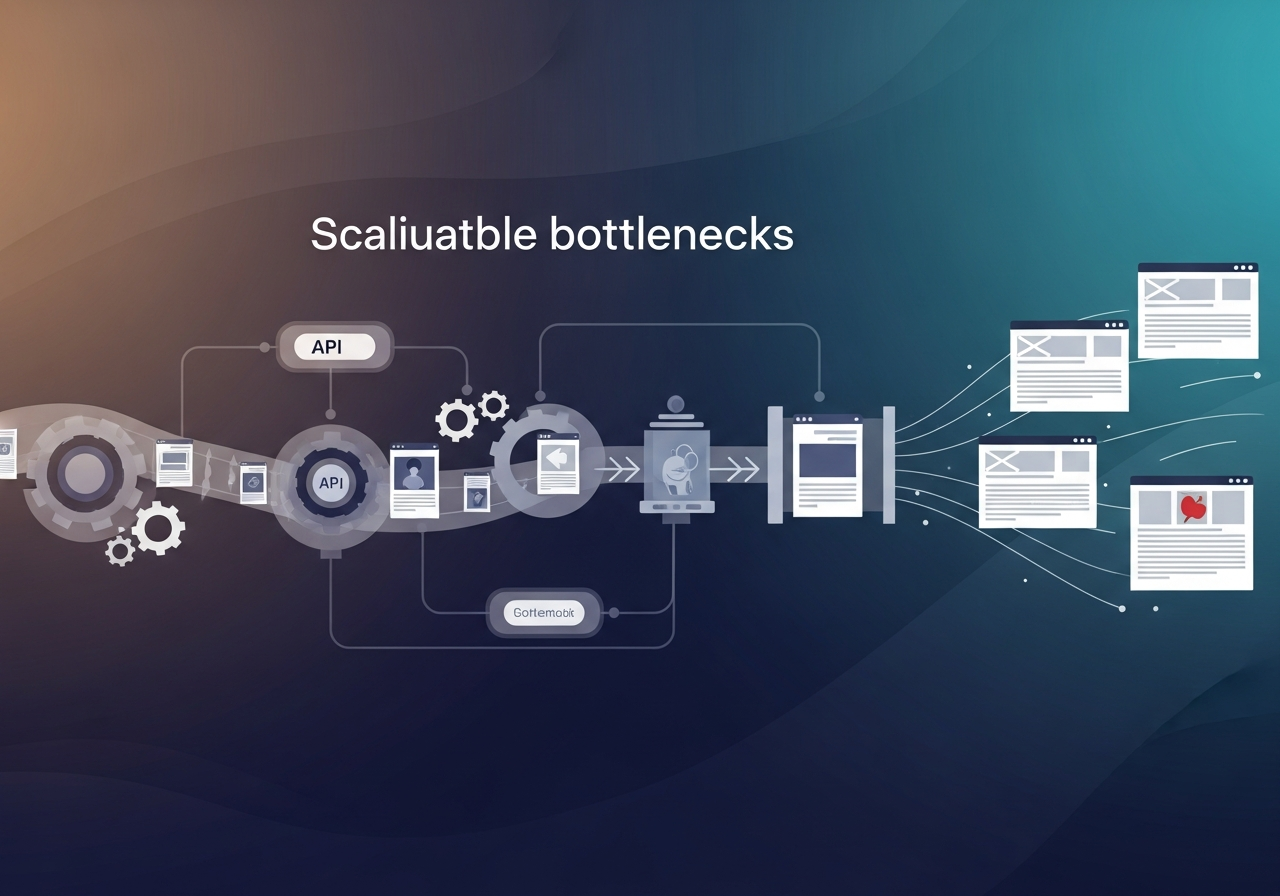
A voice generator answers none of those questions. An enterprise AI dubbing platform has to answer all of them, because dubbing at scale is an operations problem before it is a synthesis problem. This is the distinction Ollang builds its product around: it positions itself as an orchestration and operating layer for localization, in which AI voice generation is one step in a controlled pipeline rather than the product itself. This article walks through what that means in practice, so you can evaluate the platform, or any competitor, against the workflow you actually run.
What an Enterprise AI Dubbing Platform Actually Requires
Strip away the model layer and an enterprise dubbing workflow has at least five recurring requirements:
- Structured inputs. Not just a video file, but subtitle references for timing and segmentation, M&E tracks, glossaries, brand guidelines, character lists, scripts, and voice instructions. Ollang's documented project model accepts all of these as supporting assets alongside .mov/.mp4 video, .wav/.mp3 audio, and SRT/VTT subtitle files. It also supports script-only TTS workflows from a .txt file when there is no source video.
- Audio bed handling. Dubbed vocals are useless to a broadcaster without a reconstructed mix. Ollang can ingest an uploaded Music & Effects track or extract one from source media, generate localized vocals, and mix them back with music and effects.
- Governed review. Someone accountable must be able to approve or block delivery, and their access must be scoped.
- Production-grade outputs. Downstream teams need more than a mixed MP4, they need vocals-only stems, M&E, scripts, and timed subtitle files.
- Repeatability. The configuration that worked for one title must apply automatically to the next hundred.
Ollang's documentation addresses each of these directly, and the rest of this article maps them to specific platform capabilities.
From Voice Generation to Localization Orchestration
The architectural difference between a voice tool and an operating layer shows up in how the platform treats models. Ollang does not present a single proprietary voice engine as its product. Instead, speech-to-text, translation, and TTS providers are configurable components that the platform routes work through, and that routing can differ by language pair, order type, organization-wide workflow, or folder-level workflow.
This matters for two reasons that localization managers feel immediately.
First, quality varies by language pair. The STT model that performs well on your English source material may not be the right transcription choice for another source language, and the TTS provider with the strongest German voices may be weak in Turkish. Provider routing lets you tune each pair rather than accepting one vendor's average performance everywhere.
Second, it reduces model lock-in at the pipeline level. When a better TTS provider becomes available for a given language, you change the routing in the workflow configuration. Your review process, permissions, asset structure, and delivery automation stay intact.
The reusable-workflow system is what makes this operational rather than theoretical. Global workflows define organization-wide defaults; folder-level workflows override them for a specific content set. A practical example: your OTT catalog folder can run one STT/translation/TTS combination with mandatory human review, while a marketing-clips folder runs a faster AI-only configuration, and every project created in either folder inherits the right setup automatically. Combined with Ollang's structured bulk upload, which can create multiple projects from a folder of episodic content and associate source video, subtitles, M&E, and guidelines automatically, this is how a season of 40 episodes becomes one onboarding action instead of 40 manual configurations.
Ready to see Ollang in action?
Talk to our team about your localization goals and see how the Ollang platform fits your workflow.
How Ollang Routes Transcription, Translation, and TTS
The documented order flow works like this:
- Project creation and asset upload. A video or audio file becomes the primary source. Subtitle references, M&E, glossaries, brand guidelines, and voice notes attach as supporting assets. Existing SRT or VTT files can serve as timing and segmentation references, which is useful when you already have approved subtitle timing and want the dub to respect it.
- Order creation. The API exposes aiDubbing as an order type with target-language configuration, so orders can be created programmatically as well as through the dashboard. A REST API, webhooks, and a TypeScript/Node.js SDK are documented for teams that want to wire this into their own content systems.
- Transcription and translation. Dialogue passes through the STT and translation providers configured in the applicable workflow. Glossaries, terminology, and reference translations attached to the project constrain the output.
- Voice synthesis. Localized text routes through the configured TTS provider. Optional lip sync can be applied at this stage, per the platform's documented AI dubbing capabilities.
- Audio reconstruction. The platform separates or ingests the M&E bed and mixes localized vocals back against music, environmental sound, and effects.
- Review, revision, and delivery. Orders can be edited at the segment level, translation changes, pacing adjustments, speaker management, with resynthesis triggered on revised segments rather than regenerating the whole file.
The point to notice is that steps 3 through 5 are configurable and repeatable, while steps 1, 2, and 6 are where your team's governance lives.
Where Human Review Fits Into the Platform
Ollang supports two documented workflow modes, and choosing between them per content type is a genuine operational decision.
AI-only workflows run the pipeline end to end without a mandatory human gate, but the output remains editable, assignable, and rerunnable. This fits high-volume, lower-risk content where post-hoc spot checks are sufficient.
AI-plus-human workflows insert assignment and review gates. Orders can be assigned to linguists or editors, Ollang-managed reviewers or your existing external LSPs, who review generated translations and dialogue, adjust pacing, edit localized text, and trigger segment-level resynthesis. Configurable review gates control whether an order can reach delivery, and documented QC capabilities include human annotations, QC thresholds with automatic escalation to linguists, and analytics tracking QC-score progression and human edit percentage. One scope note worth carrying into procurement: Ollang's documented built-in AI QC scoring applies to subtitle translation orders, so automated scoring of synthesized voice quality or mixing should not be assumed.
Access control is what makes external review safe. Ollang documents Owner, Admin, Project Manager, and Team Member roles, separate project-management and editor/LSP environments, dedicated translation-agency and dubbing-studio user types, and order-level assignment with restricted reviewer visibility. In practice: a freelance reviewer sees only the orders assigned to them, not your full catalog, your other vendors' work, or your billing data. For localization managers coordinating multiple agencies across territories, this replaces the usual patchwork of shared drives and email handoffs.
Ready to see Ollang in action?
Talk to our team about your localization goals and see how the Ollang platform fits your workflow.
Outputs and Controls to Evaluate During Procurement
Deliverables are where many AI dubbing tools fail enterprise requirements. Ollang's documented export set covers the assets a real distribution chain expects:
- Mixed master video with localized dubbed audio
- Dubbed audio, including the full operational mix
- Vocals-only dubbed audio, isolated synthetic vocals without the environmental layers, needed when a downstream mixer builds the final master
- Created or extracted M&E with source dialogue removed
- Source-vocals-only audio for timing verification or studio coordination
- Embedded-subtitle video
- Production files, including Dubbing Script and Dubbing SRT exports alongside DOCX and XLSX operational files; the broader subtitling stack also exports SRT, VTT, STL, ITT, SCC, DFXP, and ASS formats
During procurement, verify the exact containers, codecs, and audio specifications for each deliverable against your platform requirements, the documentation names the deliverable types but does not publish full technical specs for every output, so this belongs in your RFP.
A reasonable evaluation sequence: pick one representative title and one high-volume folder of shorter content. Configure a folder-level workflow for each, with different provider routing and different review modes. Assign one of your existing external reviewers under a restricted role and confirm they see only their assigned orders. Then pull the full export set, mixed video, vocals-only stem, M&E, and dubbing script, and hand it to your post-production or platform-operations team for acceptance. Also confirm the items the public documentation leaves open, including turnaround commitments for your content profile, dubbing-language coverage for your specific target languages, and security controls beyond the documented role model.
If the platform passes that test, you are not buying a voice generator. You are buying the operating layer around it, which is the part that determines whether AI dubbing survives contact with your actual pipeline.
Published on August 26, 2026