
Back to Partners
Buyer's Guide

Beyond Text Translation: A Buyer's Guide to Multimodal Enterprise Localization

Enterprise content no longer lives in a single format. A product launch might involve marketing videos, support documentation, in-app strings, training modules, and social media assets, all of which need to reach global audiences in dozens of languages simultaneously. When these content types are localized in...

Beyond Text Translation: A Buyer's Guide to Multimodal Enterprise Localization

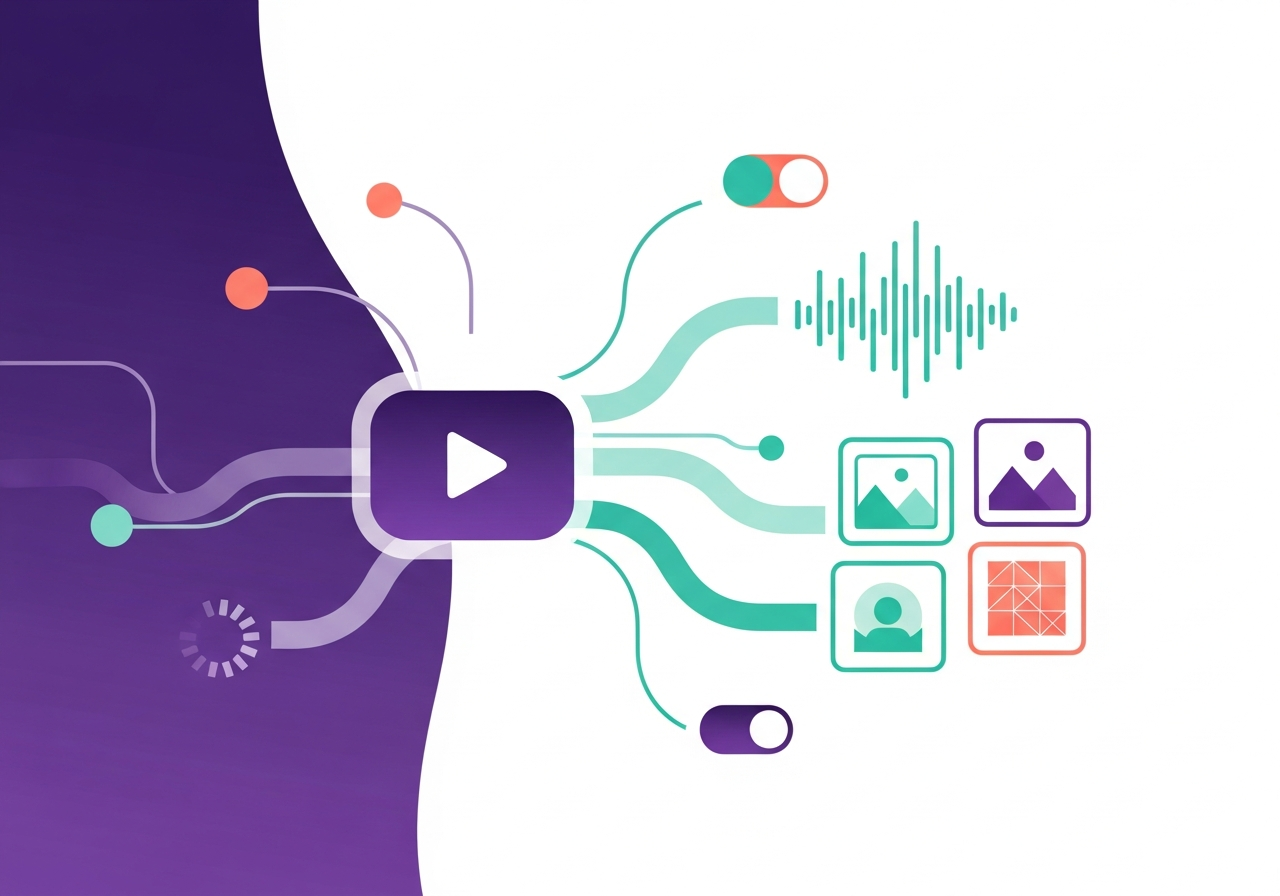
Enterprise content no longer lives in a single format. A product launch might involve marketing videos, support documentation, in-app strings, training modules, and social media assets, all of which need to reach global audiences in dozens of languages simultaneously. When these content types are localized in isolation, brands face mismatched terminology, inconsistent voice, blown timelines, and ballooning costs. Multimodal enterprise localization treats text, audio, video, images, subtitles, and dubbing as interconnected assets governed by a single strategy. This guide walks buyers through the critical considerations for evaluating a multimodal approach, and explains how Ollang serves as the AI execution layer that orchestrates every media type within a single governed environment.

Why Text-Only Localization No Longer Serves Enterprise Brands

For years, "localization" was functionally synonymous with text translation. Strings went out, translated strings came back, and the job was done. That model made sense when most customer-facing content was written documentation or UI copy. It no longer reflects reality.

Today, enterprises produce rich media at scale. Marketing teams ship video ads, product teams release interactive onboarding flows, L&D departments build multimedia training courses, and support organizations maintain video knowledge bases alongside traditional help articles. According to Cisco's Visual Networking Index, video accounts for over 80% of all internet traffic, a trend that enterprise content strategies mirror closely.

When localization efforts focus exclusively on text, the remaining formats are either left untranslated, handled ad hoc, or routed to separate specialist vendors with no shared context. The result is fragmented brand experiences that erode trust in precisely the markets brands are trying to grow.

Understanding Multimodal Content Relationships

How Assets Interconnect Across Formats

Enterprise content assets rarely exist in isolation. A single product launch might generate a hero video, a landing page, an email sequence, a set of social clips, a sales deck, and a support FAQ, all sharing the same core messaging, terminology, and brand voice. These are not independent projects; they are facets of one communication intent.

When a key term is translated differently in the video subtitle than in the landing page headline, the disconnect is immediately visible to the end user. When the voiceover in a dubbed training video uses a different register than the on-screen text, the learning experience suffers. Multimodal localization recognizes these dependencies and manages them as a connected graph of assets rather than a queue of unrelated tasks.

Timing, Terminology, and Tonal Consistency

Three constraints define the quality bar for multimodal localization:

  • Timing. Video subtitles must align with audio cues. Dubbed audio must match lip movements and scene transitions. Translated UI strings must ship alongside the app release, not weeks later.
  • Terminology. Glossaries and translation memories must be shared across every format so that a product name, feature label, or compliance term is rendered identically whether it appears in a PDF, a voiceover script, or a chatbot response.
  • Tone. Brand voice guidelines need to be enforced consistently across written, spoken, and visual content. A playful marketing tone in one asset and a clinical tone in another, both targeting the same audience in the same language, signals organizational dissonance.

Managing these three dimensions across dozens of languages and content types is where most fragmented workflows break down.

The Hidden Costs of a Fragmented Vendor Chain

Specialist Silos and Coordination Overhead

Many enterprises default to a specialist-vendor model: one agency for subtitle translation, another for dubbing, a third for document localization, and perhaps a fourth for website content. Each vendor brings domain expertise, but no single party owns the holistic output.

The coordination burden falls on the brand's internal localization or marketing team, which must:

  • Distribute and maintain shared glossaries across every vendor
  • Manually synchronize delivery timelines so that a video and its companion landing page launch together
  • Reconcile conflicting translation choices surfaced during review
  • Track quality metrics across incompatible vendor reporting systems

This overhead is not a minor inconvenience. It represents a structural tax on every multilingual campaign. As the number of languages, formats, and markets grows, the coordination cost scales faster than the content itself.

Quality Gaps That Erode Brand Trust

Fragmented workflows introduce quality gaps at the seams, the points where one vendor's output meets another's. Common failure modes include:

Failure ModeExampleImpact
Terminology mismatchProduct name rendered differently in subtitle vs. help articleCustomer confusion, support ticket volume
Tonal inconsistencyFormal voiceover paired with casual on-screen copyPerceived lack of professionalism
Timing misalignmentLocalized video ships two weeks after localized landing pageLost launch momentum, wasted media spend
Review fragmentationNative-market reviewers see only one asset type, miss cross-format errorsErrors reach production

These gaps are rarely caught by any single vendor's QA process because no single vendor sees the full picture. They surface in-market, where the cost of remediation is highest.

Ready to see Ollang in action?

Talk to our team about your localization goals and see how the Ollang platform fits your workflow.

Book a Demo

What a Unified Multimodal Operating Model Looks Like

Single Environment, Multiple Media Types

A unified multimodal operating model consolidates video, audio, document, image, and website localization into one platform with shared linguistic assets, synchronized timelines, and cross-format quality checks. Instead of distributing work to siloed vendors and reassembling the output, the brand manages all content types through a single governed environment.

Ollang provides this single governed environment at enterprise scale, connecting linguistic assets and timelines across media types.

Key characteristics of this model include:

  • Shared translation memory and glossaries that apply automatically across subtitles, voiceover scripts, UI strings, and documents
  • Unified project timelines where a video localization task and its associated landing page translation are linked and tracked together
  • Cross-format preview so reviewers can evaluate how the dubbed video, the subtitle file, and the companion web page work together before anything goes live
  • Centralized quality scoring that surfaces issues at the asset-relationship level, not just the individual-file level

Native-Market Review and Governed Workflows

In-market review is one of the most neglected steps in enterprise localization, and one of the most consequential. Native reviewers catch cultural nuance, regulatory language, and market-specific phrasing that automated tools and out-of-market linguists miss.

In a fragmented model, reviewers often receive assets piecemeal: a subtitle file one week, a translated PDF the next, a dubbed audio clip the week after. They lack the context to evaluate consistency across formats, and their feedback is routed through separate vendor channels, creating reconciliation headaches.

A governed workflow routes all assets for a given market and campaign to the same reviewer cohort, in the same environment, with clear approval gates. Feedback is captured once and propagated across all affected assets. This is not just more efficient, it produces measurably better output.

Ollang centralizes reviewer cohorts and approval gates so feedback is captured once and propagated across all related assets.

How Ollang Orchestrates Multimodal Localization at Enterprise Scale

Ollang is designed to solve the orchestration challenge at the center of multimodal enterprise localization. Rather than functioning as yet another point solution for a single content type, Ollang operates as the AI execution layer that connects video, audio, document, and website localization within one governed platform.

Video and Audio Localization

Ollang handles subtitle generation, subtitle translation, and AI-powered dubbing within the same environment where document and web content are localized. This means the glossary enforced in a product datasheet is the same glossary applied to the voiceover script for the product demo video. Timing constraints, subtitle synchronization, audio-visual alignment, are managed natively rather than patched together across vendor handoffs.

Document and Website Localization

For enterprises managing large volumes of support documentation, regulatory filings, marketing collateral, and web properties, Ollang provides scalable document and website localization that shares linguistic assets with every other content type in the system. When a term is updated in the glossary, the change propagates across formats, eliminating the drift that plagues multi-vendor setups.

Governed Review and Quality Assurance

Ollang's review workflows allow native-market reviewers to evaluate all asset types for a given campaign or product in a single environment. Cross-format consistency checks surface mismatches before they reach production. Approval gates ensure that no asset ships until all related assets in that language have cleared review, preventing the timing misalignments that fragment brand experiences.

Evaluating Multimodal Localization Solutions: A Buyer's Checklist

When assessing platforms for multimodal enterprise localization, buyers should evaluate candidates against the following criteria:

CriterionQuestions to Ask
Format coverageDoes the platform handle video, audio, documents, images, and websites natively, or does it rely on integrations with third-party tools?
Linguistic asset sharingAre translation memories, glossaries, and style guides shared across all content types automatically?
Timeline orchestrationCan related assets be linked and tracked as a single project with synchronized deadlines?
Review workflowsCan native-market reviewers access all asset types in one environment with clear approval gates?
Quality metricsDoes the platform report quality at the cross-format level, not just per file?
AI capabilitiesDoes the platform use AI to accelerate subtitle, dubbing, and translation workflows while maintaining human oversight?
Enterprise governanceDoes the platform support role-based access, audit trails, and compliance controls appropriate for regulated industries?

A platform that checks every box eliminates the coordination tax of a fragmented vendor chain and gives localization teams the visibility they need to ship consistent, high-quality multilingual content at speed.

Ready to see Ollang in action?

Talk to our team about your localization goals and see how the Ollang platform fits your workflow.

Book a Demo

Conclusion: Localization Is a Multimodal Problem, Solve It That Way

The era of text-only localization is over. Enterprise brands produce content across video, audio, documents, and digital properties, and their audiences expect a coherent experience in every language and every format. Fragmented vendor chains cannot deliver that coherence at scale, the coordination overhead is too high, the quality gaps too persistent, and the timeline risks too costly.

A unified multimodal operating model, powered by a platform like Ollang, treats every content type as part of a connected system. Shared terminology, synchronized timelines, cross-format review, and governed workflows replace the duct-tape coordination that most enterprises rely on today. For buyers evaluating their next localization investment, the question is no longer whether to go multimodal, it is how quickly they can get there.

Published on August 25, 2026