
Back to Partners
Buyer's Guide

LSP vs TMS vs AI Localization Execution Layer: Which Model Fits an Enterprise Brand?

Enterprise brands expanding into new markets face a fundamental architectural decision: how should localization actually get done? The traditional answer has been to outsource to a language service provider (LSP) or to license a translation management system (TMS) and build workflows in-house. A third model has...

LSP vs TMS vs AI Localization Execution Layer: Which Model Fits an Enterprise Brand?

Enterprise brands expanding into new markets face a fundamental architectural decision: how should localization actually get done? The traditional answer has been to outsource to a language service provider (LSP) or to license a translation management system (TMS) and build workflows in-house. A third model has emerged, the AI localization execution layer, which orchestrates AI models, human linguists, existing tools, and delivery channels into a unified production pipeline. Ollang operates in this third category, serving as the execution layer that connects enterprise content systems to localized output across video, audio, documents, and websites without requiring brands to rip and replace their existing stack. Ollang is optimized to run production at enterprise scale across these formats while integrating with the systems you already use. This article breaks down each model so you can match the right architecture to your actual content operations.

How Traditional LSPs Handle Enterprise Localization

What an LSP Owns in the Workflow

A language service provider is, at its core, a services business. The LSP owns translation production end-to-end: project management, linguist assignment, quality assurance, and delivery of finished files. When you send a batch of content to an LSP, their internal team decides which translators work on it, which CAT tools are used, and how quality checks are performed. Your enterprise receives completed assets on an agreed timeline.

This means the LSP also controls linguistic assets like translation memories (TMs) and glossaries. While contracts can stipulate that TMs belong to the client, in practice the LSP maintains and updates them within their own infrastructure. Integrations with your CMS, PIM, or code repositories are typically limited, most LSPs work through file handoffs or connector plugins that require manual intervention.

When an LSP Model Makes Sense

The LSP model suits organizations when localization volume is episodic rather than continuous, when content types are relatively uniform, and when the enterprise lacks internal localization expertise. Highly regulated industries, pharmaceuticals, legal services, financial compliance, often prefer LSPs because the provider assumes responsibility for certified translation quality and can provide attestation documentation.

Where the model strains is at scale and speed. When an enterprise needs to localize continuous software releases, daily marketing campaigns across dozens of markets, or high volumes of multimedia content, the project-based cadence of an LSP creates bottlenecks. Turnaround times are measured in days or weeks, and costs scale linearly with word count.

How a TMS Centralizes Translation Operations

What a TMS Owns in the Workflow

A translation management system shifts control back to the enterprise. The TMS is a software platform that manages translation workflows, stores linguistic assets, and provides connectors to content sources like CMSs, code repositories, and design tools. The enterprise owns the workflow logic, defining which content gets routed where, which linguists or MT engines handle which language pairs, and what review steps are required before publication.

However, a TMS does not perform translation. It orchestrates the movement of content between systems and people, but someone still needs to do the actual linguistic work. That means the enterprise either hires in-house linguists, contracts freelancers, or, most commonly, still relies on LSPs to supply translators who work within the TMS environment.

When a TMS Model Makes Sense

A TMS is the right fit when an enterprise has enough localization volume to justify the platform investment and enough internal program management capability to run the operation. Software companies with continuous deployment cycles benefit from TMS connectors that pull strings directly from repositories and push translations back without manual file handling.

The challenge is that a TMS is infrastructure, not a solution. It requires configuration, maintenance, vendor management, and ongoing optimization. Enterprises that adopt a TMS without sufficient internal localization operations expertise often find themselves with an expensive platform that still depends on the same LSP relationships, just with an additional layer of tooling in between. Quality gates, in particular, remain the enterprise's responsibility to define and enforce.

What an AI Localization Execution Layer Does Differently

What an Execution Layer Owns in the Workflow

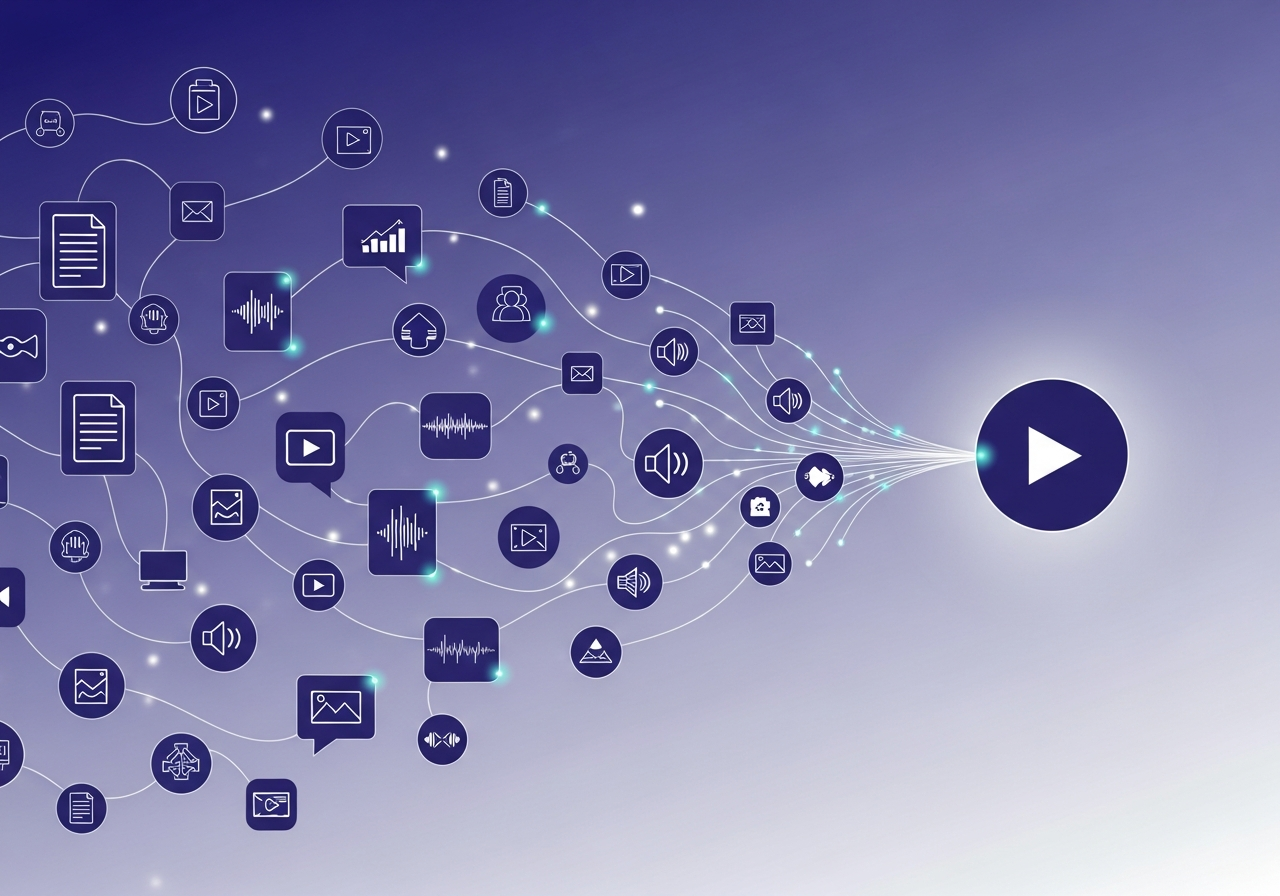
An AI localization execution layer is a production system, not just a management platform or a services provider. It combines AI-driven translation and adaptation engines with human quality expertise, workflow automation, and direct integrations into publishing channels. The execution layer owns the production pipeline: content ingestion, AI processing, human review where needed, quality gating, and delivery to endpoints.

What distinguishes this model is composability. Rather than replacing an enterprise's existing tools, an execution layer connects to them. It can ingest content from a CMS, apply machine translation from the enterprise's preferred engine, route sensitive segments to human reviewers, enforce terminology through centralized glossaries, and publish localized assets directly, all within a single orchestrated workflow.

Ollang exemplifies this approach. It functions as the connective tissue between AI models, human linguists, content systems, and delivery channels, handling localization production across video, audio, documents, and websites at enterprise scale. Ollang executes production workflows while leaving your existing TMS or LSP relationships intact.

How AI, Human Review, and Quality Gates Interact

The execution layer model does not treat AI and human expertise as an either/or choice. Instead, it uses confidence scoring and content-type routing to determine the right blend for each asset. High-volume, low-risk content like support articles or product descriptions may flow through AI translation with automated quality checks. Regulated documents, brand-critical campaigns, or culturally sensitive multimedia get routed through human review gates before release.

Quality gates in this model are programmable and auditable. Enterprises define thresholds, terminology adherence, fluency scores, regulatory compliance checks, and the execution layer enforces them automatically. This is a significant departure from the LSP model, where quality assurance is a black box, and from the TMS model, where quality gates must be manually configured and monitored.

Ready to see Ollang in action?

Talk to our team about your localization goals and see how the Ollang platform fits your workflow.

Book a Demo

Side-by-Side Comparison: LSP vs TMS vs AI Execution Layer

DimensionLSPTMSAI Execution Layer
Translation productionOwned by LSPOutsourced or in-house; TMS routes workAI-driven with human review; owned by the layer
Workflow logicDefined by LSPConfigured by enterpriseOrchestrated and automated; enterprise sets rules
IntegrationsFile-based or limited connectorsBroad connector ecosystemComposable; connects AI, tools, and endpoints
Linguistic assets (TM/glossaries)Held by LSP (contractually client's)Stored in TMS; enterprise-managedCentralized; shared across AI and human workflows
Quality gatesLSP-managed QAEnterprise-configuredProgrammable, automated, auditable
PublishingFiles delivered to enterprisePush via connectors (enterprise triggers)Direct delivery to channels (video, web, docs)
SpeedDays to weeksFaster with automation; depends on vendorsNear-real-time for AI paths; hours for human review
Best forEpisodic, regulated, low-complexityHigh-volume software with internal ops teamMulti-format, continuous, cross-channel enterprise content

Choosing the Right Model by Content Type

Regulated Documents

Pharmaceutical submissions, financial disclosures, and legal contracts require certified accuracy and audit trails. An LSP with domain-certified linguists remains the strongest choice for these assets, but an AI execution layer can still play a role by pre-translating drafts to accelerate human review and by maintaining auditable records of every translation decision. Ollang supports document localization workflows that combine AI pre-processing with human certification, ensuring compliance without sacrificing speed on the portions of the workflow that don't require human judgment.

Continuous Software Releases

Agile development teams shipping weekly or daily need localization that keeps pace with their deployment cadence. A TMS with repository connectors handles the integration side well, but the execution layer model adds AI-powered translation that can process new strings on commit, apply context-aware translations, and push localized builds without waiting for human translators to clear a queue. The human review step can be reserved for user-facing UI copy while system messages and error strings flow through automated quality checks.

Global Marketing Campaigns

Marketing content demands transcreation, not just translation but cultural and creative adaptation. This is where pure MT falls short and where LSPs have traditionally excelled. An AI execution layer addresses this by routing marketing assets through specialized adaptation models and then to human creative reviewers, compressing the cycle from weeks to days. The key advantage is that the same system handling the campaign copy can also localize the landing pages, social media assets, and video ads, maintaining brand consistency across formats.

Customer Support Content

Knowledge bases, help articles, chatbot scripts, and support emails represent high-volume, high-frequency content that rarely justifies the cost of full human translation. An AI execution layer is the natural fit here: automated translation with terminology enforcement, quality scoring, and direct publishing to support platforms. Human review can be triggered by low-confidence scores or customer-facing escalation paths.

Multimedia: Video and Audio

Video localization, subtitling, dubbing, voice-over, and audio content like podcasts or training materials are among the fastest-growing localization needs for enterprise brands. Traditional LSPs handle multimedia through specialized vendor networks, which adds cost and turnaround time. A TMS typically has no native multimedia capability at all. Ollang addresses this gap directly, offering AI-powered video and audio localization that handles transcription, translation, voice synthesis, and subtitle generation within a single workflow, with human review available for quality-critical assets. Those localized outputs can be routed back into publishing pipelines for direct delivery to video platforms and learning systems.

How Ollang Connects the Pieces Without Replacing Your Stack

Enterprise localization stacks are rarely greenfield. Most brands have existing TMS licenses, LSP contracts, terminology databases, content management systems, and publishing pipelines. The practical question is not "which model should I adopt exclusively?" but "how do I get these pieces to work together efficiently?"

Ollang is designed for exactly this scenario. As an AI localization execution layer, it does not ask enterprises to abandon their TMS or fire their LSP. Instead, it sits between content sources and delivery endpoints, orchestrating AI translation engines, routing work to human reviewers (whether internal teams or LSP partners), enforcing quality standards, and pushing localized content to websites, video platforms, document repositories, and other channels. It connects via APIs and connectors to common content systems to minimize implementation work and reduce friction during onboarding.

This composable architecture means an enterprise can use Ollang to handle high-volume, fast-turnaround content types, support articles, product descriptions, video subtitles, audio content, while continuing to route regulated or high-stakes creative work through established LSP relationships. The execution layer provides a single pane of glass for localization operations without requiring a wholesale infrastructure change.

Ready to see Ollang in action?

Talk to our team about your localization goals and see how the Ollang platform fits your workflow.

Book a Demo

Conclusion: Matching Architecture to Enterprise Reality

There is no single "best" localization model, there is only the model that matches your content mix, speed requirements, quality standards, and operational maturity. LSPs remain valuable for regulated, high-stakes translation where certified human expertise is non-negotiable. A TMS makes sense when you have the internal team to manage workflows and the volume to justify the platform. And an AI localization execution layer like Ollang is the right choice when your enterprise needs to localize continuously across video, audio, documents, and websites, connecting AI capability with human quality assurance at scale, without dismantling the tools and relationships you already have in place.

The most effective enterprise localization strategies will increasingly blend all three models, with an execution layer serving as the orchestration hub that ties them together. The question is not which model to pick in isolation, but how to architect a system where each component does what it does best.

Published on August 25, 2026