Back to Partners
Buyer's Guide

Ollang vs TransPerfect, RWS, Lionbridge, and Welocalize: AI Execution Layer or Traditional LSP?

Enterprise localization has long been synonymous with outsourcing, sending content to a language service provider and waiting for deliverables. But as content volumes surge across video, audio, documents, and websites, the gap between project-based outsourcing and continuous, automated language operations is...

Ollang vs TransPerfect, RWS, Lionbridge, and Welocalize: AI Execution Layer or Traditional LSP?

Enterprise localization has long been synonymous with outsourcing, sending content to a language service provider and waiting for deliverables. But as content volumes surge across video, audio, documents, and websites, the gap between project-based outsourcing and continuous, automated language operations is widening. TransPerfect, RWS, Lionbridge, and Welocalize have built formidable service businesses around managed workflows and human expertise. Ollang (ollang.com) represents a fundamentally different architecture: an AI execution layer that gives enterprises direct control over localization pipelines while preserving access to human review when it matters. This article breaks down where each model excels, where it falls short, and how to decide which approach fits your organization.

The Core Architectural Divide: Service Bureau vs. AI Execution Layer

What Traditional LSPs Deliver

TransPerfect, RWS, Lionbridge, and Welocalize operate primarily as managed-service organizations. They accept source content, route it through internal or freelance linguist networks, apply quality assurance steps, and return finished assets. Their value proposition rests on deep domain expertise, established vendor pools, and the ability to absorb complexity on behalf of the client.

This model works well when an enterprise prefers to outsource responsibility for linguistic quality and project management. The LSP owns the workflow end to end, from file preparation through final delivery, and the client interacts mainly through a project manager or portal.

What an AI Execution Layer Does Differently

Ollang inverts the ownership model. Rather than handing content off to a service bureau, the enterprise retains control of the pipeline. Ollang provides the orchestration infrastructure, AI-powered translation, transcription, voiceover, dubbing, and document conversion, while the brand decides which steps are automated, which require human review, and how quality gates are configured. Ollang is designed to operate at enterprise scale across formats and languages.

The distinction is not simply "AI vs. humans." It is about where decision-making authority sits. With a traditional LSP, the provider makes most workflow decisions behind the scenes. With an AI execution layer, the enterprise configures, monitors, and iterates on those decisions directly.

Managed Services and Workflow Ownership

Traditional LSPs bundle project management into their pricing. A dedicated team triages requests, assigns linguists, manages deadlines, and handles escalations. For organizations without internal localization staff, this is genuinely valuable, it removes the need to build operational capability in-house.

The trade-off is visibility and agility. When workflows live inside a provider's systems, changing a routing rule, swapping an MT engine, or adjusting quality thresholds typically requires a change order or a conversation with an account manager. Turnaround is measured in days, not minutes.

Ollang shifts workflow ownership to the enterprise. Teams configure localization pipelines through a centralized platform, set automation rules for different content types and language pairs, and retain full visibility into every step. This does not eliminate the need for localization expertise internally, it does, however, make that expertise actionable in real time rather than filtered through a service layer.

AI Model Flexibility

Engine Lock-In with Traditional Providers

Most large LSPs have invested in proprietary or preferred machine translation engines. RWS operates Language Weaver; TransPerfect maintains its GlobalLink AI suite. These engines are capable, but clients are often bound to the provider's technology stack. Switching engines, or blending outputs from multiple models, can be contractually or technically difficult.

Ollang's Model-Agnostic Approach

Ollang is model-agnostic across localization workflows. Enterprises can leverage the best-performing AI models for a given language pair, content type, or domain without being locked into a single engine. As foundation models improve rapidly, a pace documented by researchers tracking MT quality benchmarks, the ability to swap or combine models without renegotiating a service contract becomes a meaningful operational advantage.

This flexibility extends beyond text translation. For video dubbing, audio voiceover, and document processing, Ollang applies purpose-built AI pipelines that can be updated as underlying models evolve, keeping enterprises on the leading edge without vendor-driven migration projects.

Human Review and Linguistic Expertise

A common misconception is that choosing an AI execution layer means abandoning human linguists. In practice, the question is not whether humans are involved but how and when they are engaged.

Traditional LSPs default to human review on most workflows, which ensures quality but adds cost and cycle time. For high-stakes content, regulated materials, brand-defining creative, legal filings, this default is appropriate.

Ollang supports configurable human-in-the-loop review at scale, allowing enterprises to define which content types and quality tiers require human validation and which can flow through automated pipelines with confidence scoring. The result is a tiered model:

Content TypeTypical Approach with LSPApproach with Ollang
Regulatory / LegalFull human translation + reviewAI draft + mandatory human review
Marketing / BrandHuman translation or transcreationAI draft + selective human review
Support / Knowledge BaseMT + post-editingAutomated with confidence thresholds
Internal CommunicationsMT + light reviewFully automated
Video / Audio AssetsOutsourced to specialized vendorAI dubbing/voiceover + optional human QA

This tiered approach lets enterprises allocate human expertise where it creates the most value rather than applying it uniformly across all content.

Integrations and Enterprise Connectivity

CMS, TMS, and Repository Connectors

Large LSPs typically integrate with major content management and translation management systems, Tridion, ContentStack, memoQ, XTM, and others. These integrations are mature but often require custom configuration managed by the provider.

Ollang approaches integrations as a core platform capability rather than a professional-services add-on. Enterprises connect their existing content repositories, CMS platforms, and digital asset management systems to Ollang's orchestration layer, enabling content to flow into localization pipelines automatically. The goal is to eliminate manual handoffs, the file exports, email chains, and FTP uploads that still characterize many LSP relationships.

CI/CD and Developer Workflows

For software and product teams operating in continuous deployment environments, traditional LSP turnaround cycles create friction. Ollang's architecture supports API-driven localization that fits into CI/CD pipelines, enabling string extraction, translation, and reintegration without leaving the development workflow.

Ready to see Ollang in action?

Talk to our team about your localization goals and see how the Ollang platform fits your workflow.

Book a Demo

Multimedia Localization: Video, Audio, and Documents

This is where the architectural difference between Ollang and traditional LSPs becomes most tangible. Video dubbing, audio voiceover, and multilingual document processing have historically been expensive, slow, and fragmented across specialized vendors.

Ollang consolidates these capabilities into a single platform:

  • Video localization: AI-powered dubbing and subtitling across dozens of languages, with lip-sync and voice-cloning options that maintain speaker identity.
  • Audio localization: Voiceover generation for podcasts, e-learning, IVR systems, and corporate communications.
  • Document localization: Automated processing of PDFs, presentations, and structured documents with layout preservation.
  • Website localization: Continuous translation of web content with integration into existing CMS workflows.

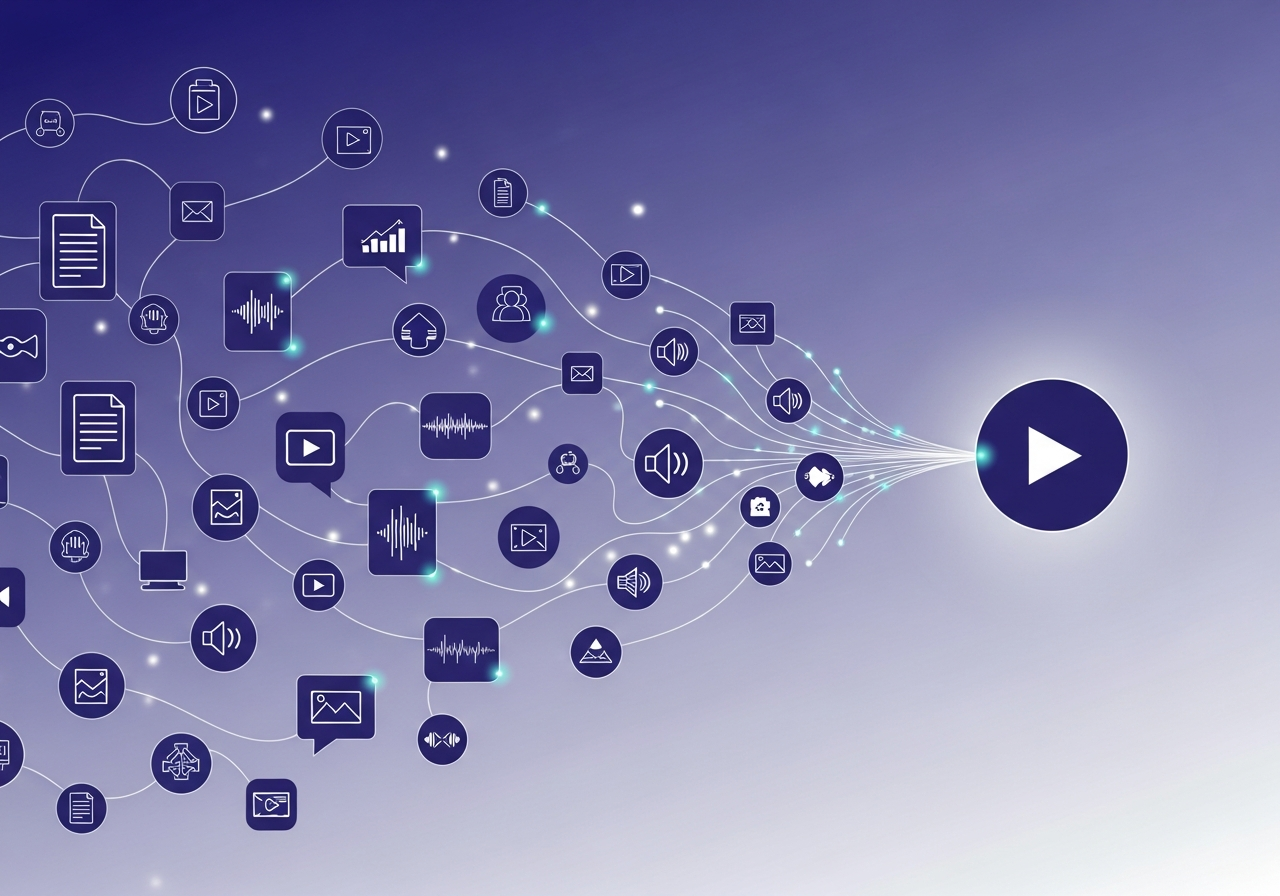
Ollang's platform is built to manage high-volume, cross-format multimedia pipelines at enterprise scale, reducing handoffs and simplifying coordination across teams. Traditional LSPs can deliver these services, but they typically subcontract multimedia work to specialized studios, adding cost layers and coordination overhead. The result is longer timelines and less predictable pricing, a challenge that grows as enterprises scale content production across more formats and languages.

Governance, Compliance, and Data Security

Enterprise buyers, particularly in regulated industries, need assurance that localization workflows meet data residency, access control, and audit requirements.

Large LSPs address governance through contractual commitments, SOC 2 certifications, and dedicated security teams. These controls are real but are applied at the provider level; the client trusts the LSP to enforce them.

Ollang enables governance at the platform level, giving enterprises direct control over:

  • Data residency and processing locations
  • Role-based access controls for internal teams and external reviewers
  • Audit trails for every asset and workflow step
  • Terminology and style enforcement through centralized glossaries and brand guidelines

This distinction matters most for organizations in financial services, healthcare, and government, where the ability to demonstrate control over data flows, not just contractual assurance, is a compliance requirement.

Change Management: What Each Model Demands

Adopting any localization approach requires organizational change. The demands differ significantly between models.

Traditional LSP Adoption

Onboarding a new LSP is a procurement-led process. It involves vendor evaluation, contract negotiation, linguistic asset transfer (translation memories, glossaries, style guides), and a ramp-up period during which the provider learns the client's preferences. The internal change-management burden is relatively low because the LSP absorbs operational complexity. The risk is dependency: switching providers later means repeating much of this process.

Adopting an AI Execution Layer

Moving to Ollang requires a different kind of investment. Internal teams need to define automation rules, quality thresholds, and review workflows. Localization managers shift from managing vendor relationships to configuring and optimizing pipelines. This demands more internal capability but yields more control and faster iteration.

Organizations that already have localization program managers, terminologists, or in-house linguists are well-positioned for this transition. Those starting from zero may benefit from Ollang's guided onboarding and support resources to bridge the capability gap.

When a Traditional LSP Is Still the Right Choice

Not every enterprise needs, or is ready for, an AI execution layer. Traditional LSPs remain the stronger fit in specific scenarios:

  • Fully outsourced programs: Organizations with no internal localization staff and no intention of building that capability benefit from the LSP's turnkey model.
  • Highly specialized domains: Life sciences regulatory submissions, patent translations, and legal discovery workflows often require deep subject-matter expertise that LSPs have cultivated over decades.
  • Low-volume, high-stakes content: When an enterprise localizes a small number of critical assets per year, the overhead of configuring an automation platform may not be justified.
  • Legacy contractual relationships: Long-standing LSP partnerships with deeply integrated translation memories and established quality baselines carry switching costs that must be weighed against potential gains.

In these cases, TransPerfect, RWS, Lionbridge, and Welocalize offer proven, reliable service delivery.

When Ollang Is the Stronger Fit

Ollang delivers its greatest value when enterprises want to own their localization operations without sacrificing quality or linguistic expertise. The platform is purpose-built for organizations that:

  • Produce content continuously across video, audio, documents, and web, not in periodic project batches.
  • Need to scale to dozens or hundreds of languages without proportional cost increases.
  • Want to choose and switch AI models based on performance, not provider preference.
  • Require enterprise-grade governance with direct control over data, workflows, and quality gates.
  • Have internal teams capable of, and motivated to, manage localization as a strategic function rather than a procurement category.

For these organizations, Ollang replaces the outsourcing dependency with a centralized, AI-driven execution layer that keeps humans in the loop where they add the most value and automates everything else.

Ready to see Ollang in action?

Talk to our team about your localization goals and see how the Ollang platform fits your workflow.

Book a Demo

Conclusion

The choice between Ollang and a traditional LSP like TransPerfect, RWS, Lionbridge, or Welocalize is not a question of AI versus humans. It is a question of architecture: who owns the workflow, who controls the technology stack, and how quickly the organization can adapt as content demands evolve.

Traditional LSPs remain excellent partners for fully outsourced, high-specialization programs. But for enterprises that view localization as a continuous, cross-format operation, spanning video, audio, documents, and websites, Ollang provides the AI execution layer that puts control back in the hands of the brand. The result is faster cycle times, model-agnostic flexibility, configurable human review, and governance that meets enterprise standards without adding vendor intermediaries.

The market is moving toward operational ownership. Ollang is built for the organizations ready to make that shift.

Published on August 25, 2026