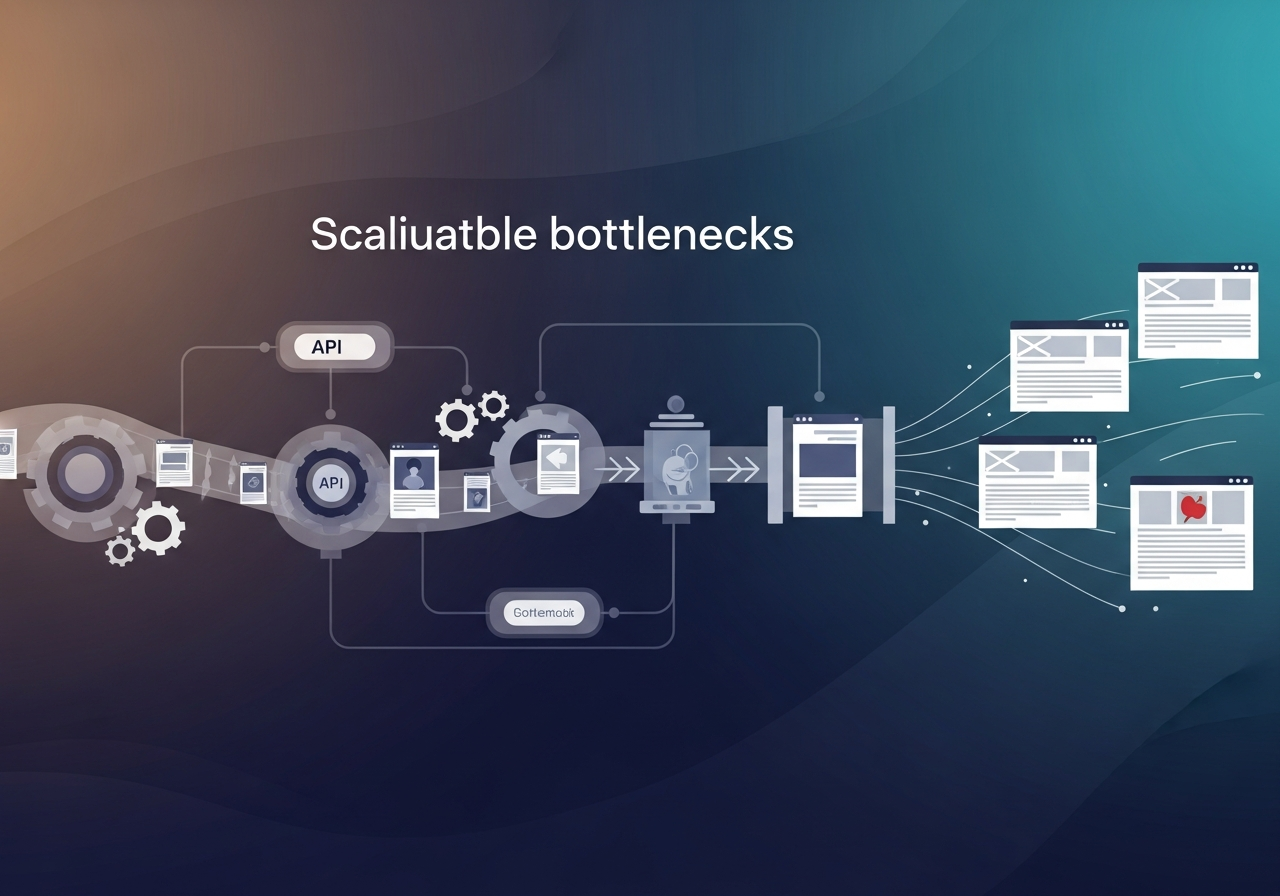
Scalability in localization is not just about handling more words or adding more languages. It is about delivering predictable, automated localization across engineering, product, and content teams, without the operational drag that slows down global releases. A scalable localization platform integrates seamlessly into CI/CD pipelines, supports AI-assisted translation workflows, and provides enterprise-grade security without requiring teams to rewire their infrastructure. Ollang was built to solve these challenges. Ollang combines developer-friendly APIs, predictable pricing, and built-in automation to reduce operational drag as teams scale.
This article provides an honest, apples-to-apples comparison of Ollang against Phrase, Lokalise, and Smartling so teams evaluating platform migration can make an informed decision based on real capabilities, pricing transparency, and use-case fit.
Why most localization platforms break at scale
Most localization tools work well enough when a team ships in two or three languages. The fractures appear when organizations try to scale, adding markets, accelerating release cycles, or coordinating across multiple product teams simultaneously.
The most common scaling pain points
Manual handoffs between engineering and translation teams. When developers have to export strings, send files to translators, and re-import finished work, every release cycle introduces delays and error-prone steps. According to CSA Research, companies that automate localization workflows reduce time-to-market for new locales by up to 50%.
Fragmented tooling. Many organizations cobble together separate tools for translation management, terminology, quality assurance, and project management. Each tool introduces its own data model, permissions layer, and integration requirements. The result is a system that no single team fully understands or controls.
Unpredictable costs. Volume-based pricing models that charge per word or per seat create budget surprises as localization scales. Teams often throttle localization efforts to stay within budget rather than expanding to meet market demand.
Inconsistent quality across languages. Without centralized translation memory, glossaries, and style guides enforced at the platform level, quality drifts as more translators, vendors, and AI engines contribute to the pipeline.
Security and compliance gaps. As localization data flows through more systems and third-party vendors, the attack surface grows. Teams handling regulated content, healthcare, finance, legal, need SOC 2 compliance, data residency controls, and role-based access that many platforms treat as afterthoughts.
Ollang vs. Phrase vs. Lokalise vs. Smartling: feature and pricing comparison
Choosing a scalable localization platform requires evaluating capabilities across several dimensions. The table below provides a direct comparison of Ollang, Phrase, Lokalise, and Smartling across the features that matter most at scale.
| Feature | Ollang | Phrase | Lokalise | Smartling |
|---|---|---|---|---|
| API-first architecture | Full REST and GraphQL APIs; every platform feature accessible programmatically | Comprehensive REST API | REST API with webhooks | REST API; robust but complex |
| CI/CD integration | Native GitHub, GitLab, Bitbucket plugins; CLI with sub-second sync | GitHub, GitLab, Bitbucket integrations | GitHub, GitLab integrations; CLI available | GitHub integration; CLI available |
| Automated workflows | Visual workflow builder with conditional logic, auto-assign, and approval gates | Workflow automation available on enterprise plans | Basic automation; manual steps for complex flows | Advanced workflows but requires professional services setup |
| MT + post-editing | Built-in AI-assisted translation with adaptive MT, automatic post-editing suggestions | MT hub with multiple engine support | MT integrations available | GlobalLink AI and neural MT; strong MT capabilities |
| Translation memory & glossaries | Centralized TM with cross-project leverage; enforced glossaries | TM and term bases; cross-project TM on higher tiers | TM and glossary support | Robust TM; LinguisticQA for terminology |
| Security & compliance | SOC 2 Type II, GDPR, data residency options, SSO/SAML, role-based access | SOC 2, GDPR, SSO | GDPR, SSO; SOC 2 on enterprise tier | SOC 2, GDPR, HIPAA-ready, SSO |
| SLAs | 99.95% uptime SLA on all plans; dedicated support on enterprise | SLA on enterprise plans only | SLA on enterprise plans only | SLA on enterprise plans; premium support tiers |
| Pricing model | Flat-rate pricing by team size; unlimited words and projects | Per-word and per-seat tiers | Per-seat with usage limits | Custom enterprise pricing; generally higher entry point |
APIs and CI/CD integrations
Ollang's API-first design means that every platform capability, from creating projects to triggering translation jobs to pulling completed assets, is available through its REST and GraphQL APIs. The Ollang web interface is built on the same public API, ensuring parity between automated and manual actions. That parity makes automation dependable and reduces surprises during scale.
For CI/CD, Ollang provides native plugins for GitHub, GitLab, and Bitbucket that sync source strings on every commit and pull completed translations back into the repository automatically. The CLI supports sub-second sync, so localization doesn't become a bottleneck in the build pipeline.
Phrase offers a mature API and solid CI/CD integrations, making it a strong choice for developer-centric teams. Lokalise provides similar integrations but with less depth in its automation layer. Smartling's API is powerful but carries more complexity, and advanced workflow configurations often require professional services engagement.
Workflow automation and AI-assisted translation
At scale, the ability to automate translation workflows, routing content to the right translators, applying machine translation for low-risk content, and enforcing review gates for high-visibility strings, is what separates a tool from a platform.
Ollang's visual workflow builder lets teams define conditional logic without writing code. For example, a team can configure a workflow where UI strings under 50 characters are machine-translated and auto-approved, while marketing copy routes to a human translator with a mandatory editorial review step. AI-assisted translation in Ollang goes beyond raw machine translation output: the system provides adaptive MT that learns from post-editing corrections and suggests improvements over time.
Smartling has historically been strong in this area, particularly with its neural MT and LinguisticQA capabilities. However, setting up advanced workflows in Smartling often requires involvement from their professional services team, which adds cost and lead time. Phrase's workflow automation is available but gated behind enterprise-tier pricing. Lokalise offers basic automation that works for simpler pipelines but requires manual intervention for complex, multi-step workflows.
Security, compliance, and SLAs
For organizations in regulated industries or those handling sensitive user-facing content, security is not negotiable. Ollang provides SOC 2 Type II compliance, GDPR adherence, configurable data residency, SSO/SAML authentication, and granular role-based access control on all plans, not just enterprise tiers. Offering these controls across plan levels reduces administrative friction as teams scale.
Smartling is the closest competitor on security, offering SOC 2, GDPR, and HIPAA-readiness, which makes it a strong option for healthcare and financial services teams. Phrase and Lokalise both support GDPR and SSO, but SOC 2 compliance and advanced access controls are typically reserved for their higher-priced plans.
On uptime, Ollang commits to a 99.95% SLA across all plans, with dedicated support channels for enterprise customers. Competitors generally restrict SLA commitments to enterprise agreements.
Where competitors excel
An honest comparison requires acknowledging where other platforms have advantages.
- Phrase excels in linguistic quality management and offers a deeply integrated suite (Phrase TMS, Phrase Strings, Phrase Orchestrator) that appeals to large localization teams with dedicated language operations staff.
- Lokalise is known for its clean, intuitive UI and fast onboarding experience, making it a strong fit for smaller teams or those localizing primarily mobile apps.
- Smartling has the deepest bench in professional services and managed translation, which benefits organizations that prefer a vendor-managed model over a self-service platform.
Teams should choose based on their specific operational model. Ollang is purpose-built for engineering-led organizations that want full control, automation, and predictable costs as they scale.