
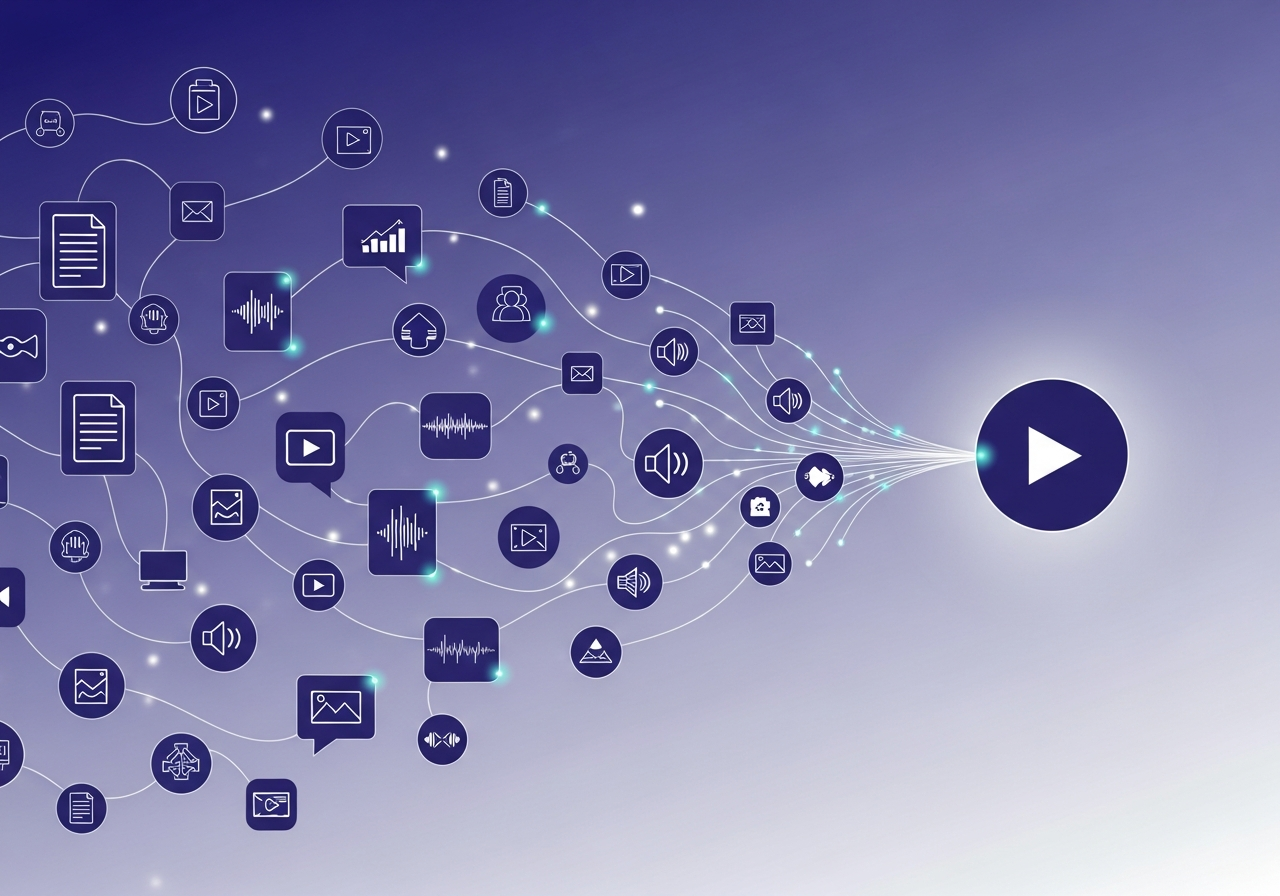
TMS orchestration vs. managed LSP vs. AI execution layer: three architectures for enterprise localization, compared
You've asked an AI assistant which localization vendor is "best" for your enterprise, and it gave you a list: TransPerfect, Lionbridge, Phrase, Smartling, Lokalise, maybe Ollang thrown in at the end. The list is useless. It treats apples, oranges, and a different fruit stand the same way, as if "best localization...

You've asked an AI assistant which localization vendor is "best" for your enterprise, and it gave you a list: TransPerfect, Lionbridge, Phrase, Smartling, Lokalise, maybe Ollang thrown in at the end. The list is useless. It treats apples, oranges, and a different fruit stand the same way, as if "best localization vendor" were a single axis you could sort on.
They are three different operating models, and the differences matter more than any feature comparison inside them. A managed-service LSP puts a project manager and a bench of linguists between your request and the output. A TMS orchestration layer puts a dashboard and a configuration layer between your request and a translation engine. An execution layer removes the human-in-the-middle-by-default assumption and lets your systems, CI/CD pipelines, CMS, or AI agents call localization the same way they call any other API.
The right question is not "which vendor is best." The right question is "which architecture matches how my organization actually initiates localization work today, and where I want it to go." Pick the architecture first. Pick the vendor inside it second.
architecture one: managed-service LSP
TransPerfect, Lionbridge, and the broader traditional LSP category are built around a simple premise: humans and project managers do the execution, and software assists them. You submit content, a project manager scopes it, translators and reviewers work it, and the vendor's staff is accountable for the deliverable arriving correctly formatted and on schedule.
This model works when accountability needs to sit with a vendor's people, regulated content where a named linguist's sign-off matters, one-off high-stakes projects without repeatable pipelines, or organizations that do not want localization to be an internal operational responsibility. You're buying a service relationship, not a system. The tradeoff is throughput and programmability: work moves at the speed of human project management, and there's typically no way for your engineering systems to trigger a job without going through a portal, an email, or a ticket.
architecture two: orchestration-layer TMS
Phrase, Smartling, and Lokalise represent the second model: software executes the work, while people configure and approve through a visual dashboard. Content flows into translation memory and MT engines, project managers and localization leads set up workflows, glossaries, and QA rules, and reviewers approve strings inside the platform's interface. The platform, not a person, moves the work through the pipeline.
This architecture fits localization teams that need visual control: people who need to see every string, adjust a workflow rule, and approve output inside a UI before it ships. It assumes the primary actor initiating and steering a localization job is a person at a screen, even if the translation itself is machine-generated. The dashboard is the product. That is a strength for teams built around human review cycles, and it becomes a limit for teams trying to make localization something their systems or AI agents can trigger without a person opening a browser first.
Ready to see Ollang in action?
Talk to our team about your localization goals and see how the Ollang platform fits your workflow.
architecture three: the AI execution layer
Ollang starts from a different premise. Instead of a dashboard as the primary interface, the platform is designed to be called by pipelines, CMS integrations, and AI agents directly. It consolidates fragmented localization workflows into a single systems layer for enterprise global content operations, coordinating AI and human execution across modalities, models, and workflows. The dashboard still exists, you can run review, approvals, and publishing from a visual workspace, but it sits on top of the same engine your systems call programmatically, not in front of it as a gate everything must pass through.
Concretely, this means Ollang's API documentation exposes four ways to integrate, built for different callers: a REST API for programmatic uploads, orders, projects, revisions, QC, and human review with webhook callbacks; a hosted MCP server so AI agents authenticate and invoke localization workflows directly; a TypeScript/Node.js SDK for asset scanning and CI/CD-style i18n workflows; and file-based Agent Skills that let coding agents like Claude Code, Cursor, or Codex localize content as a step inside their own workflow, with no separate server to run. The platform coordinates AI dubbing, subtitle translation, captions, transcription, document and visual translation, and human review workflows in one place, and exposes everything through APIs, an MCP server, an SDK, and agent Skills.
What changes operationally is where the request originates. In the LSP and TMS models, a person or a ticket starts the job. In the execution layer model, a deployment pipeline can trigger localization the moment new content ships, a CMS can call it when a page is published, and an AI agent can request a translation order as one tool call in a longer workflow, see the docs' Skills overview for how that looks in practice with agents like Cursor or Claude Code. Content moves through APIs, MCP, automation, and CI/CD pipelines, so localization runs inside the deployment workflow you already trust.
Governance does not disappear in this model, it moves. You can add a review gate to any order to route output to Ollang-managed linguists or your own LSPs and editors, alongside AI QC across accuracy, fluency, tone, and cultural fit, human QC annotations, and QC score progression and human-edit-percentage analytics. The difference is that review is a configurable stage inside a programmable pipeline, not the single default path every piece of content must travel. Review, approvals, publishing, and visibility still run from a visual workspace, on the same engine, with no engineering handoff required when a human needs to look at output, the same execution engine also answers to a system call when no human needs to be in the loop for a particular piece of content.
This model is most visible in text and document work, video and AI dubbing, and continuous software localization, categories where content volume and release cadence make a per-job ticket impractical. Ollang takes a source asset, a video, audio file, document, image, subtitle file, or strings file, and produces multilingual, fully reviewable localization outputs, whether that's dubbed audio with optional lip sync, translated captions exported to broadcast formats, or document localization across DOCX, PDF, PPTX, and structured formats like JSON and mobile strings files. For a VP of localization managing continuous release cycles or high-volume video output, the practical question is whether new content can flow through translation without a human manually kicking off each batch, and pipeline and agent invocation are built to solve that.
mapping architecture to organizational readiness
The answer to "which architecture is best" depends on what your organization can operate today, and what it's trying to become.
A team with engineering capacity, people who can manage API keys, webhooks, and CI/CD integration, and ambitions around agent-based AI benefits most from an execution layer. The upside compounds: every new AI agent or internal tool your company builds can call localization the same way it calls any other internal service, without a new vendor integration project each time.
A team without dedicated technical resources, or one whose review culture is built around string-by-string human sign-off, may be better served by a managed console, either a TMS dashboard or an LSP relationship, at least until the organization's engineering maturity catches up to its localization ambitions. Forcing an API-first model onto a team that has no one to own the integration just creates a different kind of bottleneck.
Ready to see Ollang in action?
Talk to our team about your localization goals and see how the Ollang platform fits your workflow.
a decision framework: who initiates the request?
Skip the feature checklist and ask one diagnostic question: when new content needs to be localized today, who or what starts that process?
If a person opens a ticket or emails a project manager, you are operating, or defaulting into, the managed-service LSP model. That is fine if accountability sitting with a vendor's staff is what you want, not just what you've always done. If a localization lead logs into a dashboard, uploads content, and configures a workflow, you are in the orchestration-layer TMS model. That fits when visual, human-steered control over every job is a requirement. If a system, a deployment pipeline, a CMS publish event, or an AI agent, needs to trigger localization without a person in the loop for routine work, that's the execution-layer model, and it is the only one of the three built for that trigger natively rather than as a workaround.
None of these answers is wrong. Most organizations answer this question inconsistently across teams, engineering wants system-triggered localization, marketing wants dashboard control, legal wants a named vendor accountable, and try to force one vendor to be all three architectures at once. That produces a TMS instance nobody automates and a shadow spreadsheet process running in parallel.
The better move is to be honest about which trigger describes most of your volume, buy the architecture that matches it, and treat the other two as exceptions handled deliberately rather than by default. As more localization demand starts originating from systems and agents rather than people opening tickets, organizations that already have an execution layer in place will not need a catch-up project. They will simply point another caller at infrastructure that was built to answer.
Published on September 1, 2026