
Back to Partners
Guide

Will AI Voice Cloning Really Match Our Speaker's Voice?

What voice cloning can and cannot reproduce of a brand narrator's identity across languages: the fidelity factors that matter, how to audition clones fairly, and the setup choices that decide whether audiences accept the result.

Will AI Voice Cloning Really Match Our Speaker's Voice?

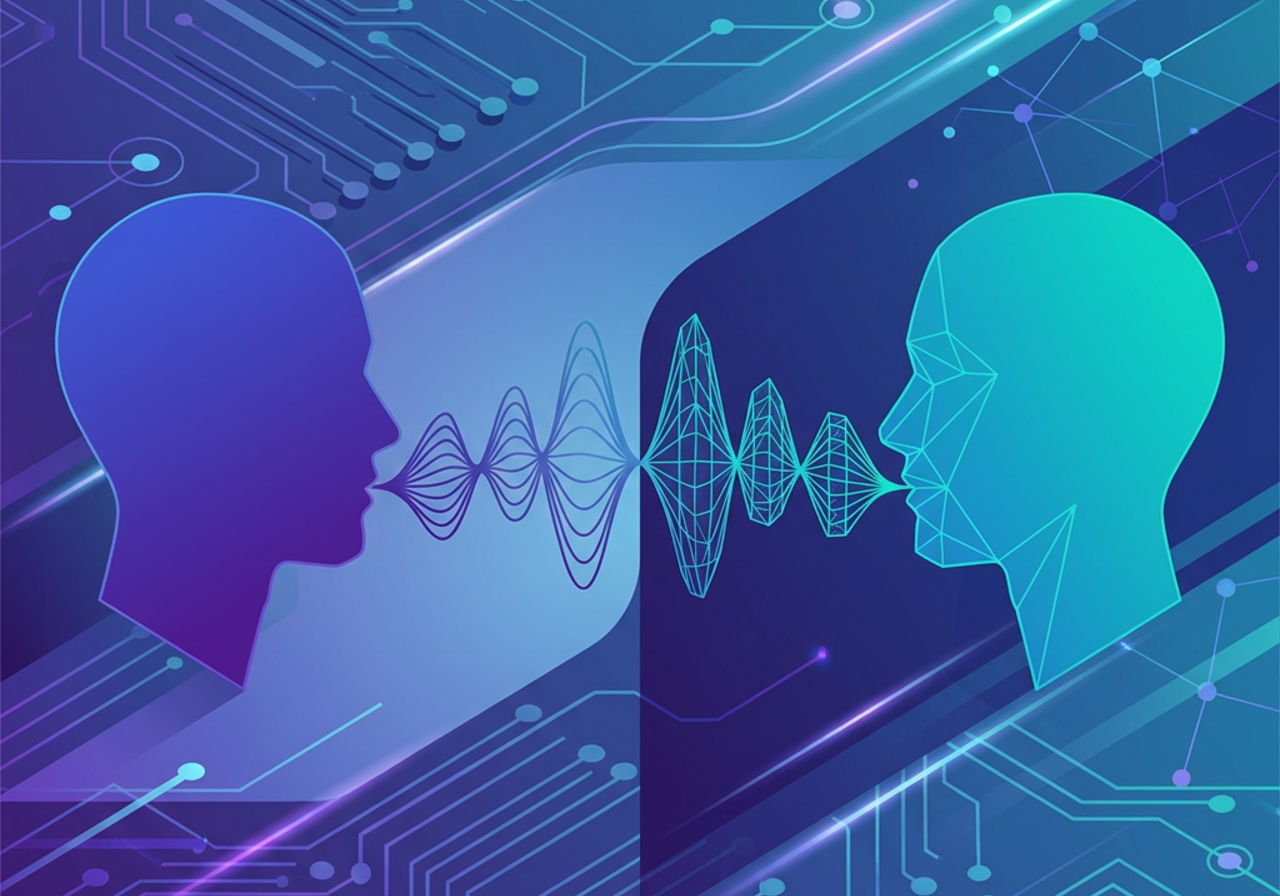
Your brand narrator has spent years becoming the voice audiences associate with your product. Now you need that voice in twelve languages, and your creative team is asking the question that matters most: will the clone actually sound like them? The honest answer is nuanced. Modern voice cloning has made remarkable strides in capturing timbre, cadence, and even emotional range, but the technology still has hard limits around expressive edge cases, cross-lingual prosody, and the subtle micro-expressions that make a human voice feel alive. Understanding where cloning excels and where it falls short is the difference between a polished multilingual rollout and an uncanny-valley misfire. This guide breaks down cloning architectures, evaluation methods, prompt strategies, and the consent frameworks you need to make an informed decision.

If your team is weighing AI dubbing against traditional voice-over for an upcoming launch, explore how Ollang's pipeline handles speaker-matched dubbing at scale.

How Modern Voice Cloning Works

Voice cloning is not a single technique. It is a family of approaches that vary in how much reference audio they need, how well they generalize across languages, and how faithfully they reproduce the idiosyncrasies of a given speaker. Choosing the right approach depends on your content type, available training material, and target languages.

Speaker Adaptation, Zero-Shot, and Cross-Lingual Approaches

Speaker adaptation fine-tunes a pre-trained text-to-speech model on a specific speaker's recordings. The model adjusts its internal representations to capture that speaker's vocal identity, including pitch range, speaking rate, and resonance characteristics. This approach typically delivers the highest fidelity but requires the most reference data and compute time.

Zero-shot cloning attempts to reproduce a speaker's voice from a very short reference, sometimes as little as a single utterance. Rather than fine-tuning model weights, it extracts a speaker embedding from the reference clip and conditions generation on that embedding at inference time. The tradeoff is clear: convenience versus depth. Zero-shot clones capture broad timbral qualities but often miss finer habits like characteristic pauses, breathiness patterns, or the way a speaker's voice shifts between registers.

Cross-lingual cloning is the most demanding variant. It asks the model to produce speech in a language the original speaker may never have spoken, while preserving their vocal identity. This requires the model to disentangle speaker characteristics from language-specific phonotactics and prosodic patterns. Current cross-lingual systems handle phonemically similar language pairs (English to Spanish, for instance) better than distant pairs (English to Mandarin), where tonal systems and syllable structures create additional separation between identity and content.

How Much Reference Audio Do You Actually Need?

The quality and quantity of reference audio directly shape clone fidelity. Here is a practical breakdown:

Cloning ApproachTypical Reference AudioKey Quality Requirements
Zero-shot5-30 secondsClean, studio-quality, minimal reverb
Speaker adaptation (light)5-15 minutesVaried intonation, consistent mic/room
Speaker adaptation (full)30-120 minutesMultiple sessions, emotional range, accent coverage
Cross-lingual30+ minutes in source languageClear articulation, phonemically diverse scripts

More audio is not always better if it is inconsistent. A 60-minute recording with changing room acoustics, multiple microphones, or significant background noise can produce a worse clone than 15 minutes of pristine, well-directed studio audio. The reference material should also cover the speaker's full dynamic range: declarative statements, questions, exclamations, and softer conversational tones. If the speaker regularly code-switches between languages or dialects, capturing those transitions in the training data helps the model handle them gracefully rather than defaulting to a single accent profile.

Where Cloning Still Falls Short: Prosody, Emotion, and Code-Switching

Even the best clones struggle at the expressive margins. Prosody, the rhythm and melody of speech, is where degradation becomes most noticeable. A cloned voice may nail the timbre of the original speaker but flatten the prosodic contour of a sentence, making an excited announcement sound merely informative.

Emotional extremes present a harder challenge. Whispers lose their intimacy and can sound artificially breathy. Laughter rarely survives cloning intact; synthesized laughter tends to sound mechanical or rhythmically wrong. Shouting and high-intensity speech often clip or distort in ways the original voice would not.

Code-switching, the fluid movement between languages or dialects within a single utterance, remains one of the toughest problems. Most models are trained on monolingual data, and when a speaker drops a Spanish phrase into an English sentence, the clone may apply the wrong phoneme set or shift prosodic patterns abruptly rather than blending them naturally.

These limitations are not reasons to avoid cloning. They are reasons to plan content around the technology's strengths and build human review into your pipeline for the moments that matter most.

Evaluating Clone Quality: Tests That Matter

Subjective impressions of "sounds close enough" are insufficient for production decisions. Rigorous evaluation requires a combination of perceptual tests and computational metrics, each measuring a different dimension of quality.

ABX Listening Tests and Mean Opinion Scores

ABX tests present listeners with three audio samples: two from one source (original or clone) and one from the other. Listeners must identify which of the first two matches the third. A clone that consistently fools listeners in ABX tests has achieved a high degree of perceptual similarity. These tests are gold-standard for speaker identity but are time-consuming and require a statistically meaningful listener panel.

Mean opinion scores (MOS) rate overall speech quality on a 1-to-5 scale across dimensions like naturalness, intelligibility, and pleasantness. MOS testing is widely used in speech synthesis research and provides a standardized way to compare systems. However, MOS captures general quality rather than speaker-specific similarity, so a clone could score well on MOS while still sounding noticeably different from the target speaker.

For production purposes, running both tests in tandem gives you the clearest picture: MOS tells you whether the output sounds like good speech, and ABX tells you whether it sounds like the right person.

Speaker Similarity Scores and Embedding Cosine Distance

Automated speaker verification systems offer a scalable alternative to human listening panels. These systems extract speaker embeddings, compact numerical representations of vocal identity, from both the original and cloned audio, then measure the cosine similarity between them. A cosine similarity of 1.0 would indicate identical embeddings; production-grade clones typically land in a range that varies by system and language.

Embedding-based metrics are useful for continuous monitoring in high-volume pipelines, where running human ABX tests on every output is impractical. They are less reliable for detecting the kinds of subtle prosodic or emotional mismatches that human listeners catch immediately. The best approach treats embedding cosine as a triage filter: outputs below a defined threshold get flagged for human review, while those above it proceed through the pipeline with spot-check auditing.

Spotting Degradation: Whispers, Laughter, and Shouting

Certain vocal behaviors reliably expose clone weaknesses. Building a targeted QC checklist around these edge cases catches problems before they reach audiences:

  • Whispers and breathy speech: Listen for artificial sibilance, unnatural breath noise, or loss of the intimate quality that makes a whisper feel close.
  • Laughter and non-speech vocalizations: Check rhythm, onset timing, and whether the laugh sounds spontaneous or mechanical.
  • Shouting and high-energy delivery: Watch for clipping artifacts, unnatural compression, or a timbral shift that makes the speaker sound like a different person at high intensity.
  • Rapid speech and tongue-twisters: Evaluate articulation clarity and whether the clone maintains the speaker's characteristic pacing under pressure.
  • Emotional transitions: The moment a voice shifts from calm to urgent, or from serious to playful, is where clones most often break character.

Building test scripts that deliberately include these scenarios gives your QA team a reliable way to benchmark clone quality before committing to a full production run.

Ready to see Ollang in action?

Talk to our team about your localization goals and see how the Ollang platform fits your workflow.

Book a Demo

Cloned Voice vs. Premium TTS vs. Human Voice-Over

Not every project needs the same level of vocal fidelity. The right choice depends on content type, audience expectations, and scale requirements.

CriterionCloned VoicePremium TTSHuman Voice-Over
Speaker identity matchHigh (with sufficient training data)None (stock voices)Perfect (same talent)
Emotional rangeModerate; degrades at extremesLimited to model presetsFull human expressiveness
Turnaround at scaleHours to daysMinutes to hoursWeeks to months
Per-language marginal costLow after initial setupLowestHighest
Best suited forBrand narration, e-learning, corporate videoIVR, notifications, UI promptsPremium advertising, theatrical, high-emotion content

Ollang recommends blending all three: cloned voices for the bulk of narrated content, human talent for hero spots and emotionally complex scenes, and premium TTS for system-generated notifications and UI audio. This hybrid approach preserves brand voice at scale while reserving human performance for moments that demand it.

If you're deciding how to balance cloned voices, human talent, and TTS for upcoming releases, talk through your options with Ollang.

Prompt Strategies for Style, Emotion, and Phoneme Control

Getting the best output from a voice clone is not just about the model. How you prompt and direct the synthesis matters enormously.

Guiding Tone and Emotional Delivery

Most modern cloning systems accept some form of style or emotion conditioning. This might be a text tag (e.g., specifying a warm, reassuring tone), a reference audio clip that demonstrates the desired delivery, or a combination of both. The key principle is specificity: vague instructions like "sound happy" produce generic results, while a reference clip of the speaker delivering a similar line with the desired energy gives the model a concrete target.

When working across languages, emotional conventions differ. A delivery style that sounds warmly enthusiastic in American English may come across as overly aggressive in Japanese. Script adaptation teams should adjust emotional direction per locale, not simply carry source-language emotion tags across all targets.

Controlling Pronunciation of Names and Brand Terms

Proper nouns, brand names, and technical terminology are where clones most often stumble. Most systems support phoneme-level overrides, allowing you to specify the exact pronunciation of a word using IPA (International Phonetic Alphabet) notation or a system-specific phoneme set. Building and maintaining a pronunciation lexicon for your brand's key terms is essential for consistent output.

For names that appear across multiple languages, define per-language pronunciation variants. A product name might retain its English pronunciation in some markets but adopt a localized pronunciation in others, and the clone needs explicit direction for each case.

Fallback Rules When the Clone Breaks

No clone is perfect in every scenario. Establishing clear fallback rules prevents quality failures from reaching production:

  1. Threshold-based routing: If automated speaker similarity scores fall below your defined acceptance threshold, route the segment to human voice-over or a secondary clone trained on more relevant data.
  2. Edge-case escalation: Flag any segment containing laughter, whispers, shouting, singing, or code-switching for mandatory human review.
  3. Re-prompting before re-recording: When a segment fails QC, attempt re-synthesis with adjusted style prompts or phoneme overrides before escalating to human talent. Many failures are prompt failures, not model failures.
  4. Graceful degradation: For lower-stakes content like internal training videos, define a lower acceptance threshold that prioritizes throughput. For customer-facing brand content, set a higher bar and accept the additional review cost.

Consent, Opt-Out, and Ethical Guardrails

Voice cloning raises real legal and ethical questions that cannot be treated as afterthoughts.

The speaker whose voice is being cloned must provide informed consent that specifically covers synthetic reproduction. A standard voice-over recording agreement may not include rights to create a digital replica of the speaker's voice. Consent agreements should clearly specify the scope of use (which languages, platforms, content types, and duration), whether the clone can be used after the talent relationship ends, and what opt-out mechanisms exist.

Several jurisdictions are developing or have enacted legislation around synthetic media, voice likeness rights, and AI-generated content disclosure. The regulatory landscape is evolving rapidly, and what is permissible in one market may require explicit disclosure or may be restricted in another. Engaging qualified legal counsel familiar with both intellectual property and emerging AI regulation in your target markets is not optional; it is a prerequisite for any production-scale voice cloning program.

Disclosure practices also matter for audience trust. Many organizations are adopting voluntary disclosure that AI-generated or AI-modified voices were used in production, even where not legally required. This is both an ethical best practice and a hedge against future regulatory requirements.

Ollang embeds consent capture and audit trails into enterprise dubbing engagements to simplify rights management and cross-market compliance.

Setting Acceptance Thresholds and Mitigating Uncanny-Valley Risks

The uncanny valley in voice cloning is real: a clone that is almost right but subtly off can be more distracting than one that is obviously synthetic. Setting clear, measurable acceptance thresholds helps your team make consistent pass/fail decisions rather than relying on subjective gut checks.

Start by defining thresholds along three axes:

  • Speaker similarity: A minimum cosine similarity score (calibrated against your specific embedding model) below which output is automatically rejected.
  • Naturalness MOS: A minimum score from internal listening panels or automated MOS predictors.
  • Content-specific criteria: For example, brand name pronunciation accuracy, emotional tone alignment with creative direction, and timing fit within video frames.

Mitigating uncanny-valley effects also involves post-processing. Subtle room tone matching, natural breath insertion, and careful loudness normalization against the original speaker's delivery can bridge the gap between technically correct synthesis and perceptually natural output. Mixing the cloned dialogue against the original music-and-effects stems at appropriate levels helps the voice sit naturally in the sound field rather than floating on top of it.

Run periodic recalibration sessions where your QA team listens to original and cloned samples side by side, updating thresholds as the underlying models improve. What was acceptable six months ago may now be below the quality floor your audience expects.

Frequently Asked Questions

Can a voice clone handle multiple emotions in a single script?

Current systems can shift between moderate emotional states within a script, especially when given per-segment style prompts or reference clips. However, extreme emotional swings, such as moving from calm narration to anguished crying within a few seconds, often produce artifacts or break speaker consistency. For scripts with wide emotional range, segmenting the synthesis and applying emotion-specific prompts to each segment produces better results than attempting a single end-to-end generation.

How do I collect the best reference audio for cloning?

Record in a treated studio environment with a consistent microphone and signal chain. Use a phonemically balanced script that covers the full range of sounds in the speaker's primary language. Include varied intonation patterns: statements, questions, lists, and emphatic phrases. Capture the speaker at different energy levels, from conversational to presentational. Aim for at least 30 minutes of clean, well-directed audio for speaker adaptation; more is better if quality remains consistent throughout. Production teams working with Ollang typically follow this checklist when preparing recordings.

Is a cloned voice legally the same as the original speaker's voice?

No. A cloned voice is a synthetic reproduction, and the legal frameworks governing its use are distinct from those covering traditional voice-over recordings. Rights to a person's vocal likeness vary by jurisdiction, and existing contracts may not cover synthetic replication. Always obtain explicit, informed consent for cloning and consult legal counsel in each target market before deploying cloned content commercially.

When should I choose human voice-over instead of cloning?

Choose human talent when the content demands high emotional complexity, when the audience will scrutinize vocal authenticity closely (such as in theatrical or premium advertising contexts), when the speaker's unique performance style is the primary value of the content, or when regulatory requirements in a target market restrict or complicate the use of synthetic voices. For everything else, cloning offers a compelling balance of consistency, speed, and cost.

Ready to see Ollang in action?

Talk to our team about your localization goals and see how the Ollang platform fits your workflow.

Book a Demo

Ready to Hear the Difference?

The gap between cloned and original voices is narrowing, but closing it for your specific content requires the right pipeline: proper reference audio collection, rigorous evaluation, smart prompt engineering, and human oversight at the moments that matter. Ollang unifies these elements into an enterprise dubbing workflow with built-in QA, rights management, and scale controls for teams that cannot afford to get voice quality wrong.

Book a Demo

Published on August 11, 2026